
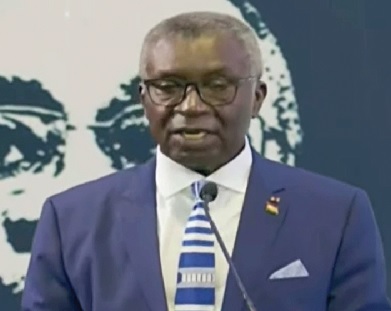
A former Minister of Environment, Science, Technology and Innovation, Prof. Kwabena Frimpong-Boateng, has called on successive governments to redefine the measure of good governance by focusing on reducing the daily hardships faced by citizens rather than the number of infrastructure projects they commission.
He said governments should rather be assessed by tangible improvements in the lives of ordinary people, including shorter commuting times, affordable housing, food security and lower utility costs.
He argued that while roads, schools and hospitals were important, the true test of leadership was the extent to which public policies enabled citizens to live dignified and productive lives.
“The true measure of leadership is the extent to which the people can be mobilised to live independent lives, to feed, shelter, clothe, defend and heal themselves with their own means,” he stated.
Event
Prof. Frimpong-Boateng said this while delivering a commemorative lecture held in Accra yesterday.
Organised by the J.E.A. Mills Memorial Heritage, the lecture formed part of a series of activities to commemorate the 14th anniversary of the passing of former President John Evans Atta Mills.
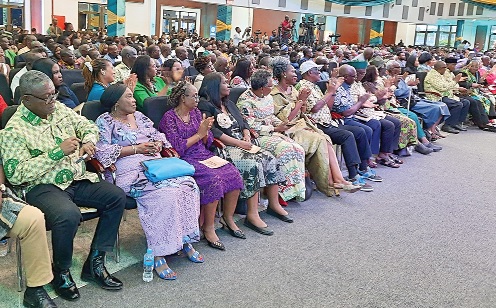
The event, chaired by the Special Representative of the UN Secretary-General for Libya and Head of the United Nations Support Mission in Libya (UNSMIL), Hannah Tetteh, brought together various stakeholders and admirers of the former president, including senior government and public officials, academia and industry leaders, among others.
Long-term planning
Prof. Frimpong-Boateng, a renowned cardiothoracic surgeon, said the nation’s development agenda must be anchored on long-term national planning rather than politically branded programmes that disappeared whenever governments changed.
According to him, initiatives such as One District, One Factory, Planting for Food and Jobs, Agenda 111 and the 24-hour Economy reflected a pattern where development programmes failed to outlive the administrations that introduced them.
Instead, he proposed sustained investment in science, technology and innovation, with research institutions, universities, the Council for Scientific and Industrial Research (CSIR), the Ghana Atomic Energy Commission and the Ghanaian diaspora placed at the centre of national development.
He expressed concern over the chronic underfunding of universities, research institutions and the Environmental Protection Agency (EPA), describing the situation as a major obstacle to technological advancement and environmental protection.
“No country that has achieved technological advancement has done so by demanding that its public research institutions pay for themselves through the market,” he said, adding that the country’s scientists should be supported to undertake research rather than being compelled to generate revenue to survive.
The former minister also linked the country’s recurring floods to weak enforcement of planning regulations and the destruction of wetlands, stressing that the country could not achieve meaningful development without protecting its environment and strengthening state institutions.
Reflecting on the legacy of Professor John Evans Atta Mills, Prof. Frimpong-Boateng described him as a leader of integrity, humility and accountability whose Better Ghana Agenda sought to transform the country through disciplined governance, science, industrialisation and the fight against corruption.
He urged political leaders to honour the late President’s memory by pursuing policies that transcend electoral cycles and place the welfare of citizens above partisan interests.
