
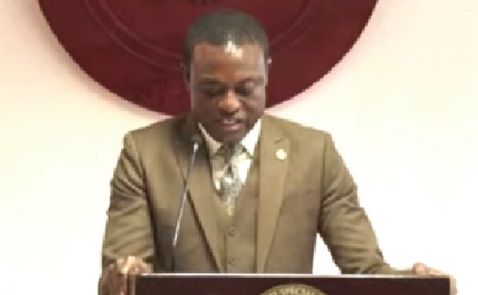
The Special Prosecutor, Kissi Agyebeng, has called for the Office of the Special Prosecutor (OSP) to be entrenched in the Constitution to guarantee its independence and strengthen the fight against corruption.
He said the OSP’s constitutional entrenchment would provide the institution with greater independence and help insulate it from undue influence.
At the National Anti-Corruption Dialogue 2026 in Accra last Thursday, Mr Agyebeng said a review of anti-corruption frameworks across jurisdictions had informed proposals to strengthen the country’s system.
The dialogue was held on the theme: “From Commitment to Delivery: Reviewing the Mahama Administration’s Anti-Corruption Agenda After 18 Months.”
It was organised by Ghana Anti-Corruption Coalition (GACC), Africa Centre for Energy Policy (ACEP), and Transparency International-Ghana.
Constitutional backing
He said constitutional independence should be accompanied by financial independence, with dedicated funding arrangements to reduce the institutions’ dependence on normal budgetary allocations.
Mr Adjebeng also advocated dedicated funding for anti-corruption institutions and a lifestyle audit regime under which persons whose wealth appears inconsistent with their lawful income would be required to explain the source of their assets.
He said the measures were necessary to make the country’s anti-corruption efforts more effective, arguing that the existing statutory and financial arrangements of anti-corruption institutions needed fundamental reform.
The Special Prosecutor also advocated a shift in the approach to unexplained wealth.
He said where a person’s lifestyle and assets could not reasonably be matched with their known lawful sources of income, the law should require that person to explain how the wealth was acquired.
He stressed that such a presumption should operate within due process and should not be seen as a shortcut around legal safeguards.
“Lifestyle audit” would, therefore, require individuals to demonstrate that they could lawfully afford the assets and lifestyle associated with them, he explained.
Mr Agyebeng said requiring anti-corruption agencies first to secure criminal convictions before pursuing unexplained wealth made the recovery process more difficult.
EOCO reforms
For his part, the Head of the Legal and Prosecution Unit of the Economic and Organised Crime Office (EOCO), Leo Anthony Siamah, called for the speedy passage of a new EOCO Bill
He said the proposed law would strengthen EOCO’s investigative powers and improve non-conviction-based asset recovery.
He also called for digital forensic tools, specialised personnel and adequate resources to enable anti-corruption agencies to tackle increasingly sophisticated financial crimes.
Public trust
The Chairman of the GACC, Nana Osei-Bonsu, said corruption remained a persistent challenge that undermined public trust, weakened institutions, affected service delivery and impeded inclusive national development, despite the country’s democratic gains and successive efforts to address the problem.
He said the dialogue provided an opportunity to assess progress on anti-corruption commitments made ahead of the December 2024 elections, identify gaps and agree on practical measures to strengthen integrity, transparency and accountability in governance.
