
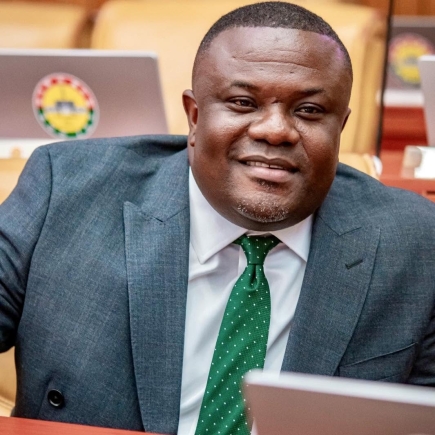
The Minority Caucus in Parliament has accused the government and the Public Utilities Regulatory Commission (PURC) of imposing what it described as unjustified tariff increases on the citizenry.
The Caucus said increasing the electricity tariff by 3.49 per cent and water by 0.85 per cent was a betrayal of the promise to ease the cost of living.
With the government repeatedly pointing to the appreciation of the cedi, declining inflation and lower interest rates as evidence that the economy had turned the corner, it said if those gains were genuine, Ghanaians should be experiencing them in their daily lives.
Contradiction
Addressing the press on tariff increases in Parliament today (June 25), the Ranking Member on the Energy Committee, Collins Adomako-Mensah, said falling inflation and easing interest rates should further reduce cost pressures across the economy.
“Yet PURC is increasing electricity tariffs once again.
This contradiction demands answers.
If the strength of the cedi is real, if the decline in inflation is real, and if the reduction in interest rates reflects genuine macroeconomic improvement, why are utility tariffs continuing to rise?” he asked.
Mr Adomako-Mensah said since January 2025, electricity tariffs in Ghana had risen by a staggering cumulative 26.82 per cent.
Over the same period, he said the government awarded workers a meagre 10 per cent wage increase, less than a third of the tariff burden placed on those very same workers.
Touching on how such tariff increases could impact industry, he said Ghana's manufacturers, processors and small enterprises operated in one of the most tariff-burdened utility environments in West Africa.
In his view, every upward adjustment in electricity costs eroded their competitiveness, raised the cost of production and ultimately pushed prices higher for the very consumers the National Democratic Congress (NDC) claimed to be protecting.
On the explanation that utility tariff increases were conditions of the IMF programme negotiated by the previous New Patriotic Party (NPP) administration, Mr Adomako-Mensah said Ghana had formally exited the IMF Extended Credit Facility programme.
The conditionalities that accompanied that programme, including requirements around cost-reflective utility tariffs, expired with it, he said.
He pointed out that the NDC government was no longer bound by any IMF obligation to raise electricity or water tariffs as they were free, saying, “That excuse is gone”.
“It is, therefore, safe to say that this is the NDC's tariff regime, chosen freely and felt painfully by every Ghanaian,” he said.
Demands
Mr Adomako-Mensah, therefore, called on the government and the PURC to publish, in clear and accessible language, the full mathematical basis for every tariff increase since January 2025.
“The government and the PURC must revisit the 2026–2030 Multi-Year Tariff Order, which imposed a 9.86 per cent electricity increase at the start of 2026, in light of emerging macroeconomic improvements that the PURC itself has acknowledged,” he said.
