
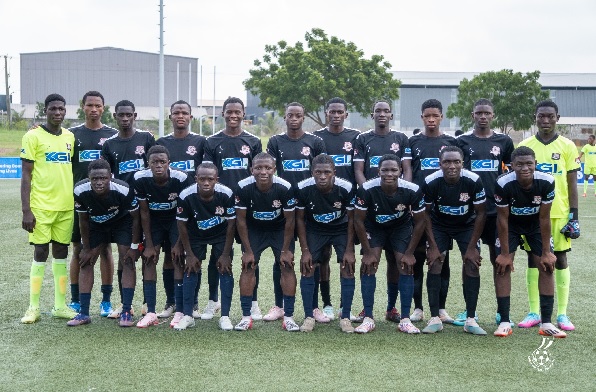
For decades, Ghana’s reputation in African football rested not only on the achievements of the Black Stars, but also on the remarkable talent pipeline that continually fed the national teams and professional game.
The country appeared capable of producing gifted young footballers in abundance, nurturing them through vibrant community competitions before propelling them onto the national and international stages.
Ghana, in effect, became Africa’s “Golden Hen” of youth football — a nation admired around the world for its rich reservoir of talent and sustained success at youth level.
That identity has faded. The most disturbing evidence is the decline of the Black Starlets. Ghana, twice FIFA Under-17 world champions, have repeatedly failed to qualify for the global competition despite the continued presence of raw football talent in communities across the country.
The contradiction is impossible to ignore. The talent has not disappeared. The conveyor belt has weakened. That is why the revival of Colts football deserves far more than ceremonial launches and nostalgic speeches. It must become a central pillar of Ghana’s football-development strategy.
Former Black Stars captain Asamoah Gyan is therefore right to demand sustained investment, stronger structures and long-term stakeholder commitment.
Gyan speaks with the authority of experience. Before becoming Ghana’s all-time leading international goalscorer, his own football education began at Great Cedabs, one of the community clubs that formed part of the old Colts ecosystem.
His description of Colts football as “the foundation of Ghana football” is not sentimental exaggeration. It is historically demonstrable. Generations of outstanding Ghanaian players emerged from neighbourhood pitches where coaches identified talent early, competition was intense and communities invested emotionally in young players.
Those environments developed technique, resilience, courage and competitive intelligence long before academy football became fashionable.
The challenge now is to rebuild that ecosystem for a different era.
The Ghana Football Association’s latest intervention is therefore encouraging. The provision of 3,000 footballs from Hoshi International, 15,000 jerseys, 15,000 pairs of casual shoes, and the commitment to providing every Colts club with footballs and bibs over the next three seasons gives the revival tangible support.
The FA’s annual US$100,000 investment in grassroots football also demonstrates recognition that development requires resources.
However, equipment alone will not rebuild the system.
Gyan’s warning that the enthusiasm surrounding Colts football has diminished should concern everyone involved in Ghana football.
The old system thrived because communities cared, local coaches mattered, clubs were competitive and young players had regular opportunities to play meaningful matches.
Reviving Colts football therefore requires coordinated action involving the GFA, government, corporate Ghana, sponsors, schools, communities and regional football structures.
It must also be properly organised, monitored and linked clearly to academies, youth national teams and senior football.
President John Dramani Mahama’s recent call for stronger structures to identify and develop players adds important national attention to the issue. But attention must translate into policy, infrastructure and investment.
Ghana cannot continue lamenting the decline of its youth teams while neglecting the system that once produced them.
If Ghana wants the Black Starlets, Black Satellites and ultimately the Black Stars to become consistently competitive again, Colts football must be treated not as a side project, but as the foundation on which the future of Ghana football depends.
