


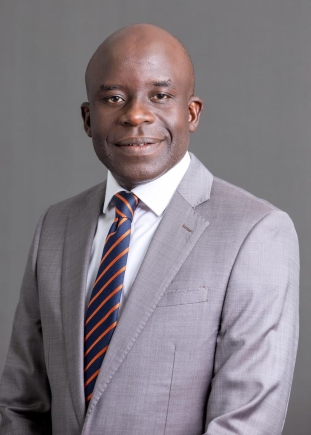
Give legal backing to long-term National Planning - Stanbic Head of Investment Banking
The Head of Investment Banking at Stanbic Bank Ghana, Kobby Bentsi-Enchill, has emphasized the need for a legally backed national development framework to secure long-term investor confidence and shield Ghana’s development agenda from disruptions caused by political transitions.
Speaking during a panel discussion at the Stanbic Bank/Graphic Business Breakfast Meeting, Mr. Bentsi-Enchill underscored that investor confidence grows from consistent economic direction rather than shifts tied to election cycles. He stated that stability and predictability over extended periods are key factors investors look for when committing capital.
“Indeed, investor confidence is not built on political cycles. It's over decades of consistency,” he said.
Mr. Bentsi-Enchill argued that relying solely on political will to drive national development outcomes is insufficient. Instead, he recommended that Ghana introduces a legal mechanism that mandates adherence to long-term national plans, ensuring continuity regardless of which government is in power.
“So how do you build political will? I think you begin by not leaving it to only the will of the politician,” he noted. He stressed that anchoring the country’s baseline development plan in law would create clear obligations for successive administrations. “It goes back to the point we made around if there's going to be law that backs the baseline plan,” he said.
He added that a law-backed framework would introduce accountability and deter abrupt policy reversals that could derail progress. “If you come in and you don't do it, you know you have caused financial loss to the state, and you can be prosecuted,” he stated. “A political party or administration may therefore differentiate themselves by how much of the national plan they implement and how well they execute its implementation. Beyond that, parties may of course be at liberty to pursue incremental goals, reflecting their unique political ideologies”, he added.
Mr. Bentsi-Enchill further noted that the aim is not to constrain governments but to encourage them to sustain impactful long-term projects, aligned with the non-partisan interests of the state.
The event, which brought together policymakers, financial sector leaders, development experts and media practitioners, explored the theme of building investor confidence through consistent long-term national planning beyond political cycles.
On his part, the Chief Executive of Stanbic Bank Ghana, Kwamina Asomaning, argued that political continuity is not at odds with democratic practice. On the contrary, he said, adherence to long-term national programs strengthen democratic institutions. “The truth is, continuity does not undermine democracy; it strengthens it. When citizens see that national projects survive beyond election cycles, trust in both government and democracy deepens,” he added.
He emphasized that investors are more willing to commit resources when national priorities are protected from abrupt shifts. “Investors, too, gain confidence when they know that commitments made today will not be abandoned tomorrow,” he said.
To safeguard this stability, he recommended that Ghana’s long-term development plan be approved by Parliament to give it national legitimacy and insulation from political transitions. “If we truly want this plan to work, wouldn’t you agree it must be approved by Parliament, giving it legitimacy beyond party lines and ensuring continuity regardless of political transitions?” he asked.