

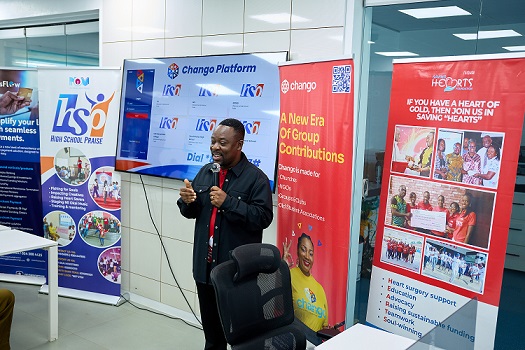
Concerts and musical performances are largely organised to entertain audiences and showcase talent. Gospel events go a step further, seeking to inspire and uplift people. But when an event also nurtures young talent and helps save lives, it becomes much more than entertainment.
That is what makes Nii Okai’s High School Praise project worthy of attention and support.
At a time when the creative arts industry places considerable emphasis on commercial success, streaming numbers and celebrity status, an initiative that invests in young people while giving back to society deserves commendation.
Schools remain important grounds for discovering and developing young talent. With the right encouragement, mentorship and exposure, students participating in High School Praise today could become tomorrow’s leading gospel musicians and creative professionals.
By bringing together students from institutions such as Shield International School, Tema International School, Akosombo International School, Life International College, Ghana Christian International High School and Vine Christian High School, the programme promotes collaboration, creativity and confidence through music.
Its charitable impact is equally commendable. Last year’s fund-raising effort helped finance the heart surgery of eight-year-old Husseina, demonstrating how the project’s commitment to supporting vulnerable children can translate into tangible, life-changing results.
Corporate partners such as IT Consortium and Sweet Muzic Pro Audio also illustrate how businesses can contribute meaningfully to initiatives that combine youth development, creativity and social responsibility.
However, High School Praise’s greatest promise lies in its potential to become a national platform for talent development and social intervention. Nii Okai’s ambition to transform it into a festival involving schools across Ghana deserves more than encouragement. It requires deliberate institutional and corporate support.
Talent is not confined to well-resourced schools or major urban centres. Across the country, particularly in underserved communities, gifted young people lack the exposure, mentorship and opportunities needed to develop their abilities. Expanding High School Praise nationally could help bridge this gap while extending its charitable mission to more children and families in need.
Such growth cannot depend indefinitely on the goodwill and resources of its organisers. It requires a sustainable framework involving educational authorities, corporate partners, philanthropists and other stakeholders.
We believe the Ghana Education Service and the Ministry of Education should explore practical ways to facilitate wider school participation, including regional and national engagements. Corporate organisations committed to education, youth empowerment and community development should also consider sustained partnerships rather than occasional sponsorship.
High School Praise has demonstrated what can be achieved when music is harnessed for a greater purpose. The next challenge is to build the partnerships and institutional support needed to extend its impact beyond a handful of schools and communities.
Ghana has much to gain from initiatives that combine creative talent development with compassion and social responsibility. High School Praise offers an opportunity to advance both objectives on a national scale.
It is music with a mission, and that mission deserves a national platform, sustained investment and collective support to touch many more lives.
