

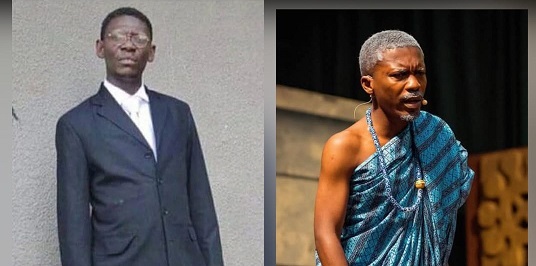
If Ghana ever exports laughter, it might rival cocoa. We are a nation that laughs at everything from dumsor to politics, and that natural gift has quietly built a thriving comedy industry.
Today, comedians fill auditoriums, skits generate millions of views and digital creators earn a living making people laugh. Yet, somehow, comedy is still dismissed as "just jokes." That may be the funniest joke of all.
Where the laughter began
The history of organised comedy in Ghana stretches back to the 1950s when theatre became an important tool for education, entertainment and cultural expression.
Long before microphones, comedy specials and viral skits, there was Anansesem. Storytellers used wit, satire and clever characters to teach lessons while keeping audiences thoroughly entertained. Those traditions naturally found their way into modern theatre.
One of the architects of this movement was the celebrated playwright and cultural icon Efua Sutherland. Through her pioneering work with the Ghana Drama Studio and her promotion of indigenous theatre, she encouraged productions rooted in Ghanaian culture and language. Humour became an essential ingredient because audiences often accept difficult truths more readily when they are laughing.
Alongside formal theatre grew the famous Concert Party tradition. Travelling performance groups toured towns and villages, combining music, dance and hilarious dramatic sketches that reflected everyday Ghanaian life. Their performances poked fun at everything from marriage and chieftaincy to greed, politics and family life. They became the country's first organised comedy circuit and trained generations of performers who later dominated television, theatre and film.
When television became the front row seat
By the 1980s, television brought comedy into living rooms across the country.
Through GTV, programmes such as Akan Drama and Showcase became weekly appointments for many Ghanaian families. Produced in Akan and several other Ghanaian languages, these dramas reflected the realities of everyday life with generous doses of humour.
Television also introduced concert party competitions that became talent factories for aspiring performers. Long before talent shows offered cash prizes and celebrity judges, these competitions were discovering comedians who would later shape Ghana's entertainment industry.
The rise of stand-up comedy
Although comedy had flourished in theatre for decades, stand-up comedy emerged as its own discipline through pioneers such as Fritz Baffour. He demonstrated that one person armed with a microphone, a sharp tongue and keen observation could keep an audience laughing without relying on costumes or elaborate stage productions.
Then came Kwaku Sintim-Misa, better known as KSM.
If Fritz Baffour planted the seed, KSM watered the tree. He transformed stand-up comedy into a commercial enterprise by producing professional live shows that attracted paying audiences, corporate sponsorship and national attention. Suddenly, people were buying tickets simply to laugh.
Comedy had become serious business.
The man who laughed Ghanaian movies back to life
There was also a time when Ghanaian films struggled to compete against the flood of Nigerian home videos.
Then arrived Agya Koo, armed with impeccable comic timing, unforgettable facial expressions and the ability to turn everyday situations into unforgettable comedy.
Movie producers quickly realised that comedy sold tickets, and Agya Koo became one of the biggest stars in the country. In many respects, comedy helped revive Ghana's film industry when it needed rescuing most.
A new generation takes the stage
The past decade has seen Ghanaian comedy evolve into one of the country's fastest-growing creative sectors.
Comedians such as DKB, Foster Romanus, Lekzy DeComic, Jacinta Ocansey, Khemikal, Clemento Suarez, OB Amponsah, MJ the Comedian and several others have transformed stand-up into polished entertainment capable of selling out theatres and attracting international audiences.
The formation of comedian associations has strengthened collaboration within the industry while comedy clubs have created regular spaces where performers refine their craft and mentor emerging talent. The result is an industry that is becoming more organised, more professional and more ambitious.
Then came social media
If television expanded comedy, social media launched it into another galaxy.
Today, a smartphone, creativity and reliable internet are often enough to start a comedy career. Across YouTube, Facebook, TikTok and Instagram, Ghanaian skit creators have built audiences numbering in the hundreds of thousands and, in some cases, millions.
What appears to be a one-minute joke is often the result of scriptwriting, filming, editing, directing, marketing and brand strategy. Behind every successful skit is a growing team of young Ghanaians earning a living from the creative economy.
The monetisation opportunities offered by YouTube, Facebook and TikTok, together with brand partnerships and influencer marketing, have turned comedy into a multi-million-dollar business. What started as short videos shared among friends has become one of the country's newest employment sectors.
It turns out that making people laugh can also pay the bills.
More than entertainment
Comedy's impact reaches far beyond the stage.
Every major comedy show creates work for sound engineers, lighting technicians, photographers, graphic designers, ushers, security personnel, ticketing companies, transport operators, caterers and hotels. It stimulates business, attracts sponsorship and contributes to tourism.
More importantly, comedy remains one of Ghana's most authentic cultural exports. It reflects our languages, celebrates our traditions and captures the uniquely Ghanaian ability to laugh at ourselves without losing our dignity.
Countries such as Nigeria have successfully exported comedy across Africa, Europe and North America. Ghana possesses the talent to achieve the same. Our comedians are already performing internationally and proving that Ghanaian humour travels remarkably well.
The final punchline
The story of Ghanaian comedy is not merely about jokes. It is a story of resilience, creativity and entrepreneurship.
From Efua Sutherland's pioneering theatre movement and the travelling Concert Parties to GTV dramas, Fritz Baffour's groundbreaking stand-up, KSM's commercial revolution, Agya Koo's rescue of local cinema and today's digital skit creators, comedy has consistently reinvented itself while entertaining generations of Ghanaians.
The only thing that has failed to keep pace is the recognition the industry deserves.
Government, cultural institutions and private investors should stop viewing comedy as a supporting act and begin treating it as one of Ghana's strongest creative assets. With strategic investment, dedicated festivals, export promotion and stronger institutional support, comedy could become one of Ghana's most successful cultural exports while creating thousands more jobs for young people.
After all, few industries can claim they have kept a nation smiling through economic hardship, political uncertainty, football heartbreak and endless family WhatsApp debates.
That is not just entertainment.
That is nation-building with a punchline.
