

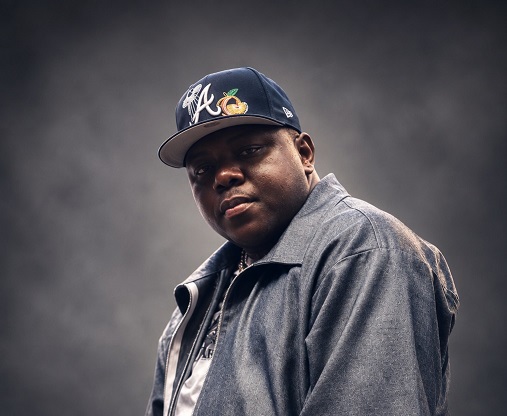
GHANA birthed Hiplife, but rapper OG Abrantie believes the country has failed to truly own it, leaving a genre that once dominated the music scene now struggling to claim the recognition it deserves.
To OG Abrantie, although Hiplife is neither dead nor dying, it has been pushed into the background because industry players have not done enough to protect and promote its identity.
He noted that while newer Ghanaian music movements such as Asakaa have secured distinct categories on global music distribution platforms such as Spotify, Hiplife, which shaped Ghana’s music industry in the late 1990s and early 2000s, cannot boast of the same recognition.
That gap reflects a bigger failure by the industry to properly claim, document and promote Hiplife as a Ghanaian musical identity.
“We are all to be blamed, all industry players. We have failed to lift the banner of Hiplife high,” he said in an interview with the Graphic Showbiz on Monday, September 14.
OG Abrantie, who released a Hiplife-focused EP, Is It Elementary?, in May, believes the conversation about preserving the genre should go beyond individual efforts and become a collective responsibility for the music industry.
His comments come at a time when veteran Hiplife artiste Reggie Rockstone, widely regarded as the grandpapa of Hiplife, has been making efforts to reignite conversations around the genre and its place in Ghana’s music space.
While he applauds such efforts, OG believes Reggie should not be left to carry the Hiplife advocacy alone.
“The grandpapa, Reggie Rockstone, is making some noise lately, but we will need almost everyone on board. We all have a role to play - the veterans, established artistes, rappers and emerging Hiplife acts. We need everyone on board to keep the genre visible and relevant.
“For me, the bigger issue is not whether Hiplife has evolved. The issue is whether we, as Ghanaians, have been bold enough to claim it, own it and promote it as our identity,” he said.
The rapper also takes issue with the tendency to describe contemporary Ghanaian music through sounds and labels that originate outside the country.
He argued that Ghana risks losing its musical identity when artistes and industry players focus too much on chasing trends rather than strengthening what the country already has.
“What’s Nigerian sound? Though they may have their indigenous sound, we can arguably say their forefront sound has been Highlife with contemporary beats named Afrobeats, which is Ghana’s sound also,” he said.
He believes the problem is not necessarily musical evolution but the failure to document Ghana’s contribution to the sounds being developed and popularised across Africa.
“Documenting, having the identity stamped and sealed, and claiming it and not waiting for foreign entities doing that for us,” he added.
Rather than resisting new sounds, he wants Ghanaian musicians to embrace contemporary influences while keeping the country’s musical identity intact.
That philosophy, he said, is at the heart of his new EP, Is It Elementary?, a project created to announce his identity as a Hiplife artiste.
He said releasing one or two Hiplife songs would not have been enough to communicate what the genre means to him.
“Is It Elementary? is to explicitly show my musical identity, a genre I love so much. Dedicating the EP to Hiplife is inevitable,” he stated.
