
The destruction of mangrove vegetation along Ghana's coastline has been identified as the main cause of the escalating flooding and other climate change impacts in coastal communities and needs sustained sensitisation to stem the tide.
The Regional Coordinator of the "Improving Resilience of Coastal Communities in Côte d'Ivoire and Ghana Project," an initiative of UN-Habitat, Mouhamadu Diene, has, therefore, stressed the need for stronger collaboration between state agencies and local actors to restore degraded mangrove vegetation to save the shoreline.
“We need to improve sensitisation in these coastal communities because mangrove does not only have the role of protecting those communities and being a hiding area for fish, it also help to stabilise the soil,” he said.
Again, he stressed that as climate change continued to intensify its impacts worldwide, local adaptation measures, particularly the restoration of mangroves, were critical to mitigating its effects.
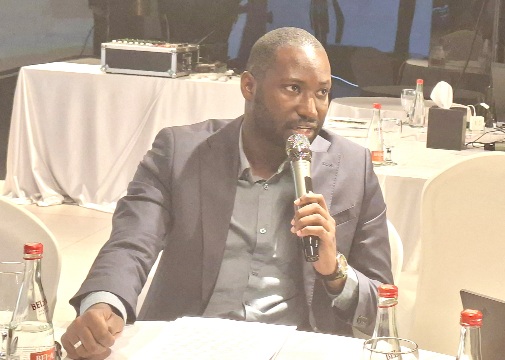
Mr Diene stated this in an interview with the Daily Graphic during the third steering committee meeting of the Improving Resilience of Coastal Communities in Côte d'Ivoire and Ghana Project in Accra on Thursday, September 10, 2026.
About project
The about $14-million project, which is being implemented by UN-Habitat, was approved in August 2023 and started in September 2024, to help reduce the vulnerability of small and medium-sized coastal communities to climate change impacts.
The project, which is expected to be delivered by 2029, was designed to protect vulnerable, low-lying communities from climate-driven erosion, floods and sea-level rise.
It is focused on highly vulnerable coastal zones, specifically targeting 21 communities across Ghana and Côte d'Ivoire.
In Ghana, the project is being implemented in 11 communities, including areas in the Greater Accra and Volta regions and mainly anchored on early warning systems, nature-based solutions and climate-resilient livelihoods.
The communities include Agorkedzi/Atiteti, Agbledomi, Dzita, Tegbi, Woe, Lagbati/Lashibi and Whuti in the Anloga District.
The others are Azizanya/Kewunor in the Ada East District and Akaplabanya, Wokumagbe and Goi in the Ada West District.
Impact
Mr Diene told the Daily Graphic that barely two years after the project was rolled out, 111 hectares of mangroves had been planted in some of the beneficiary communities, with the area expected to increase to 200 hectares by October this year.
“We have been working with members of those communities, including over 40 per cent of women, to restore the mangrove vegetation. We provided seedlings for them to undertake the planting activities,” he said.
He added that as part of the project, UN-Habitat was working closely with the Forestry Commission to provide technical and supervisory responsibilities over the planting of the mangrove and other nature-based solutions.
Mr Diene said the international body was also leveraging the expertise and capacities of the Ghana Hydrological Authority, the Wildlife Division and other state agencies to ensure that the project made the desired impact.
Spatial development
For his part, an Associate Professor for Spatial Planning Support Systems and Institutionalisation at the Faculty of Geo-Information Science and Earth Observation, University of Twente, Prof. Luc Boerboom, said field evidence in Ghana and Cote d’Ivoire had revealed an emerging second corridor, which presented new implications for climate impacts and sustainable development.
He explained that there was a lot of investment going on about 80 kilometres north of the coast in both countries, and that presented challenges in terms of climate impacts.
Prof. Boerboom stressed that there was a need to make sound decisions on how to make use of the secondary corridor without tampering with the natural ecosystem.
For instance, he said in areas where there were estuaries, rivers and wetlands, spatial planning could be done in a way that would reduce the pressure of development by moving the investments inland.
