
A striking contradiction runs through the veins of the global climate conversation.
All corners of Africa are attuned to the reality that the aftermath of global warming is no longer theoretical.
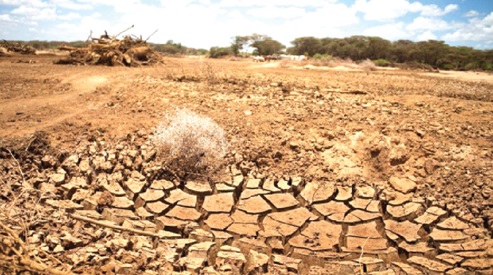
Recent African news evidence the impact of climate change; from rising seas to devastating floods and crippling droughts.
Its impacts are dismantling the systems we rely on: water, energy, transport, food, and health.
ChannelOne TV (Ghana) reports droughts and floods in northern and southern Ghana, respectively.
CitizenTV of Kenya reports that climate change is fuelling human-animal conflicts in Kajiado County.
Essentially, scholars in the arena of climate change must receive their flowers for negotiating an immediate shift away from fossil fuels, which arguably speeds climate change and its global impact.
However, Africa’s willingness to give out such flowers cannot be done wholeheartedly, as Africa prays to secure its fossil fuel for industrialisation and to create millions of jobs for a booming youth population.
The great energy paradox of our generation is that, although Africa contributes less than four per cent of global greenhouse gas emissions, it bears a disproportionate share of the devastating effects of climate change.
Meanwhile, the developed countries whose historical and ongoing emissions have largely driven this crisis continue to account for a significant portion of global greenhouse gas output.
Ironically, history shows that the economic prosperity and industrial advancement of these nations were built on the extensive use of cheap fossil fuels such as coal, oil and natural gas, which they exploited for more than two centuries.
Yet, these same countries now urge Africa to limit its reliance on fossil fuels in pursuit of a ‘just energy transition’, despite the continent's comparatively negligible contribution to global emissions and its pressing developmental needs.
The question that requires asking is, “Is it genuinely ‘just’ for developed countries to dictate to 600 million Africans living without basic amenities such as electricity to rapidly go in for Clean Energy Technologies and adopt ‘Just Energy Transition’ or is it a blueprint for the legalisation of Africa’s underdevelopment?”
Industrialisation imperative
In the words of Todd Mose (founder of Energy Growth Hubb) ‘‘no country in human history has ever moved from poverty to prosperity without using massive amounts of energy.’’ To Africa, this averment demonstrates that we cannot use fossil fuel as a revered stool when our bellies see no food, and our bodies receive no warmth from the energy within our grasp.
Out of the seven continents of the world, Africa has for decades functioned as a simple extraction zone for other developed continents, by shipping off its natural resources to the West and other industrialised societies at a very low price.
However, by adding value to these same resources, only a few Africans can afford the finished products shipped to African markets by the West and other industrialised countries.
To escape this loop, Africa must add value to its resources through industrialisation.
This requires the use of cheap fossil fuels to power heavy-duty machines.
If Africa is to radically abandon cheap fossil fuels, local manufacturing will remain uncompetitive against the industrial prowess of developed nations, appealing to the conscience of Africa for a ‘Just Energy Transition’.
A phenomenon that will continue to accelerate the export of raw materials, which Mr Dangote, an African Billionaire and Industrialist, refers to as ‘exporting jobs and importing poverty’; a phenomenon that creates wealth outside Africa.
The fossil fuel trap: Fuelling Africa’s future ruin
Should Africa’s industrialisation hinge solely on fossil fuels?
The major cause of climate change in the 21st century is known: fossil fuels.
From its exploration, production, transport and utilisation.
The next phase of Africa’s development is industrialisation.
As Mr Aliko Dangote puts it, ‘Africa must produce what Africa uses.’
So, Africa must drive the African industrialisation agenda with clean, sustainable, and renewable energy sources, alongside cheap fossil fuels.
Coupling these two energy sources is the prudent way forward.
Be it fossil fuel resources and reserves, the African continent has them in abundance.
The same can be said for renewable energy resources, such as solar, wind and hydro.
Africa has more renewable energy resources than any other continent.
Africa’s greatest challenge in its industrialisation journey lies in owning the technologies to harness its vast energy resources for a sustainable and prosperous future.
The writer is a Lecturer and a Just Transition Expert at the Energy Systems Engineering Department of the Koforidua Technical University, Ghana.
