
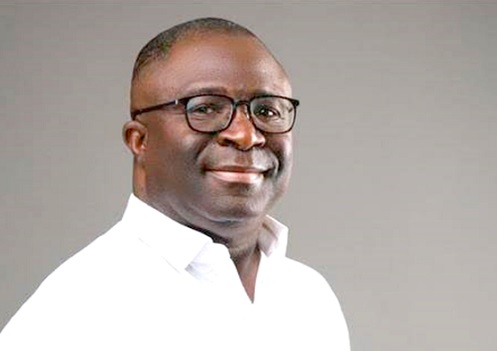
A former Member of Parliament (MP) for Subin and aspirant for the New Patriotic Party (NPP) General Secretary position, Eugene Boakye Antwi, has called on the party to adopt a 'one member, one vote' system, arguing that broadening internal democratic participation is central to rebuilding the NPP's electoral competitiveness after its 2024 defeat.
Speaking on Adom 106.3 FM, Boakye Antwi framed the proposal as the next logical step in the NPP's democratic evolution, acknowledging the important role delegates have played in the party's growth while arguing that the time has come to deepen grassroots ownership of internal decision-making. He said extending voting rights to all card-bearing members would strengthen the party's connection to ordinary Ghanaians and position it more competitively ahead of future elections.
The 2024 general election was a difficult moment for the NPP. The party lost both the presidential race and its parliamentary majority, and the conversation since has centred on what structural and organisational changes are needed to return the party to government. Boakye Antwi's position is that internal democratic reform must sit at the centre of that conversation.
He pointed to the Jimmy Heymann Committee, chaired by former South African High Commissioner Dr Jimmy Heymann, which recommended one member, one vote as far back as 2009. Several subsequent reform committees arrived at the same conclusion. "The Jimmy Heymann committee recommended universal suffrage for party members back in 2009, and committees after that said the same thing," he said. "The party had a perfect opportunity to implement these reforms at the July 2025 National Delegates Conference in Legon after our 2024 performance, but we did not act."
He expressed disappointment that the opportunity was not taken and said the reasons given for the delay did not adequately reflect the time and political will available to the party at that point. "You cannot cite logistics as an excuse when the recommendation has been on the table for over fifteen years," he said.
Boakye Antwi also drew on his own experience on the ground to illustrate what genuine grassroots politics demands. After his selection as parliamentary candidate for Subin in June 2015, he committed fully to constituency work from the outset. "When I was selected as candidate in June 2015, I travelled for three months, and when I returned, starting from November, we went to every house, church and mosque in Subin," he said. "People could feel that you were a grassroots person."
He argued that the experience gained at the ground level is what equips party leaders to make sound decisions at the national level. "The experience you get from the ground, if you are able to bring it to the top, that is what makes you effective," he said, citing seasoned figures within both major parties as examples of leaders whose grassroots foundations shaped their political judgment.
He also reflected on the organisational lessons of 2016, when the NPP's decision to deploy agents to every polling station proved decisive. "We sat and said there cannot be an election where results are declared and as a candidate you cannot get your hands on your pink sheet," he said, referring to the reforms committee he served on alongside Dr Bawumia, Mike Oquaye and Mike Manu. "That brought the huge victory in 2016."
On 2024, Boakye Antwi did not shy away from the party's unpreparedness. "What was our readiness? You do not go for elections just like that," he said. "If you are a candidate or parliamentary candidate on the ground, you know where all the difficulties can happen, so you prepare." He was careful, however, to acknowledge that the defeat reflected a range of political, economic and organisational factors rather than any single cause.
His argument is that deepening internal democracy, expanding participation, investing in youth engagement and strengthening polling station structures together form a renewal agenda the party must now prioritise. "A lot goes into the battle," he said. "You do not let them beat your brother before you come and ask questions."
