
Ghana became famous because of cocoa.
That is the truth.
For decades, cocoa has fed our economy, built our reputation, and sustained millions of farmers.
But let’s be brutally honest.
Cocoa also exposed our biggest weakness: we produce, others profit.
We grow it.
They process it.
We export raw.
They sell finished products.
We celebrate volume.
They control value.
Now history is about to repeat itself.
There is a crop quietly sitting in the shadows, ignored by policymakers, misunderstood by farmers, and invisible to most businessmen.
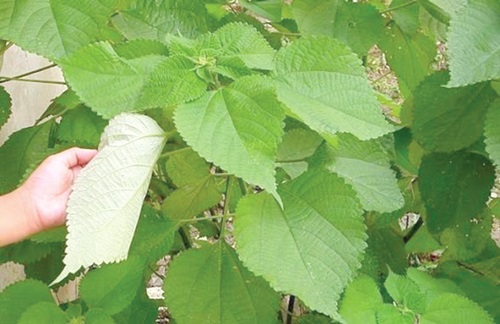
That crop is ramie.
And if Ghana does not wake up, it will become the next cocoa, but at that time, we may not even be at the centre of it.
Ramie is not just a crop
It is an industrial weapon. A fibre stronger than cotton, more durable than linen, and increasingly demanded in global textile and industrial markets.
While cocoa feeds mouths, ramie feeds factories.
That is the difference between survival and power.
Countries like China already understand this.
They don’t treat ramie as farming; they treat it as a system.
They cultivate it, process it, refine it, and export it as finished products.
They control every stage.
That is why they dominate industries while others struggle with raw exports. And Ghana?
We are still thinking like farmers in a world that rewards industrial strategists.
Let me provoke you
If ramie enters Ghana today, most people will rush to plant it.
They will celebrate yields.
They will talk about hectares.
They will export it raw.
And within 10 years, the same story will emerge.
Foreign companies will control processing, branding and global distribution.
We will clap again for ourselves while losing again.
That is the Ghanaian pattern.
This is not about a lack of resources.
We have land. We have labour.
We have a stable environment.
What we lack is thinking.
Strategic thinking. Long-term thinking. System thinking.
The average Ghanaian trader does not understand value chains. He understands buying and selling.
The average businessman does not understand systems.
He understands deals.
The average policymaker does not understand industry. He understands elections.
So when an opportunity like Ramie appears, we treat it like cocoa.
We rush to produce, not to control.
That is why others win. I saw this clearly when I met a Chinese businessman in my travels.
Calm. Calculated.
Observant. He did not speak like a trader.
He spoke like an engineer of systems.
When he mentioned crops like ramie, he was not talking about farming.
He was talking about control, control of supply, processing, pricing and export markets.
That is the difference
While we are thinking of planting, he is thinking of factories.
While we are thinking of selling, he is thinking of scaling.
While we are thinking of today, he is thinking of dominance in 20 years.
And here is the uncomfortable truth: if Ghana does not act intelligently, ramie will be built in Ghana but not by Ghanaians.
Foreign investors will come.
They will secure land.
They will build processing plants. They will train a small local workforce.
They will export finished goods. And we will stand on the sidelines, celebrating “foreign direct investment” while owning nothing.
Sound familiar?
That is cocoa all over again. But this time, we have no excuse.
The world is changing. Industries are moving toward sustainable fibres.
Cotton has environmental limits. Synthetic materials are under pressure. Global manufacturers are searching for alternatives that are strong, eco-friendly, and scalable. Ramie fits perfectly into that future.
This is not luck. This is timing. And timing, without strategy, is a wasted opportunity. Imagine a different Ghana.
A Ghana that does not just grow ramie but builds an entire ecosystem around it: large-scale mechanised cultivation. Industrial processing plants convert fibre into high-value materials.
Textile factories producing export-ready goods. Integration into continental markets through the African Continental Free Trade Area.
That is not agriculture.
That is industrial power.
That is what cocoa should have become.
Let me be offensive for a moment
Ghana is not poor. Ghana is poorly organised. Our problem is not resources; it is mindset.
We think small in a world that rewards scale.
We think short-term in a world that rewards patience.
We think individually in a world that rewards systems.
Ramie is not just another crop. It is a test.
A test of whether Ghana has learned anything from its past.
A test of whether our businessmen can think beyond quick profit.
A test of whether our leaders can see beyond elections. Because the opportunity is clear.
The land is available.
The market is emerging.
The demand is growing.
The only missing piece is intelligence applied with discipline.
If we fail, the outcome is predictable.
Others will build the industry.
Others will control the value chain.
Others will make the real money.
And we will repeat the same tired narrative: “Africa is being exploited.” No.
Africa is being out-thought.
And until we accept that, nothing will change.
Ramie can become Ghana’s next cocoa, but only if we refuse to repeat cocoa’s mistakes.
Only if we move from farming to industry.
Only if we move from participation to control.
Because in the end, wealth does not belong to those who produce.
It belongs to those who structure, control, and dominate the system.
And that is the difference between a country that survives… and a country that leads.
