
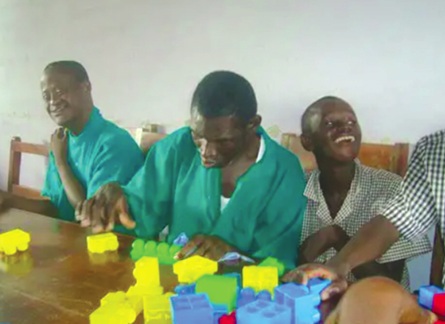
Neurodiversity is a simple but powerful idea: human brains are not all the same, and that is okay.
Just as people differ in height, language, culture and personality, we also differ in how we think, learn, communicate and experience the world.
Autism is one of these natural differences.
This year’s theme for World Autism Awareness Day, “Autism and Humanity: Every life has value,” reminds us of a truth we must hold firmly in Ghana and beyond: Every autistic person matters, and their life is meaningful.
For many years, autism has been misunderstood.
Some people see it only as a problem or a limitation.
Others attach fear, shame or even spiritual explanations that lead to stigma.
These beliefs can cause families to hide their children, delay seeking help or feel isolated.
But autism is not a curse, and it is not something to be feared. It is a different way of experiencing the world.
Autistic individuals may communicate differently, prefer routines or be sensitive to sounds, lights or touch.
Some may speak very little, while others may speak a lot but in unique ways.
Some may need support in daily activities, while others live independently and contribute greatly to their communities.
There is no single way to be autistic.
Each person is unique, with strengths, challenges and potential.
When we talk about neurodiversity, we shift our focus. Instead of asking, “What is wrong with this person?” we ask, “How can we support this person to thrive?”
This change in mindset is important. It helps us see ability, not just difficulty. Many autistic individuals have strengths such as attention to detail, honesty, creativity and deep focus.
With the right support, these strengths can shine in schools, workplaces and communities.
Challenges
However, the biggest challenges autistic people face are often not their differences, but the barriers created by society.
When schools are not prepared to support different learning styles, children are left behind. When public spaces are too noisy or overwhelming, individuals are excluded.
When employers are unwilling to give opportunities, talent is wasted.
These barriers send a harmful message that some lives are less valuable than others.
This is not true.
In Ghana, we all have a role to play in changing this narrative.
Families and communities must begin by showing understanding and acceptance.
Simple acts such as listening without judgment, being patient and including autistic individuals in everyday activities can make a big difference.
Children learn from what they see. When they grow up in inclusive environments, they become adults who respect and value differences.
Responsibility
Churches, which are at the heart of many Ghanaian communities, have a special responsibility.
They must become places of welcome and support for autistic individuals and their families.
This means creating awareness, avoiding harmful beliefs that blame families and making services more inclusive.
For example, allowing quiet spaces, being flexible with participation and offering support to caregivers can help ensure that everyone feels they belong.
Hospitals and healthcare providers must also do more.
Early identification and support are key, but many families struggle to access services.
Healthcare workers need training to understand autism and communicate effectively with both children and parents.
Services should be made more accessible and affordable, so that no family is left without help because of cost or distance.
The government has a critical role in shaping an inclusive society.
Policies must support inclusive education, ensuring that children with different needs can learn in environments that respect and support them.
Public awareness campaigns can help reduce stigma and promote understanding.
Investment in training professionals such as teachers, therapists and healthcare workers is essential. Accessibility should also be considered in public planning, from schools to transportation and community spaces.
Most importantly, autistic individuals must be given a voice.
Their experiences, needs and ideas should guide the decisions that affect them.
Inclusion is not just about providing services, it is about respect, dignity and equal opportunity.
As we mark World Autism Awareness Day, let us reflect on the theme: “Every life has value”.
This is not just a statement; it is a call to action.
It challenges us to look beyond differences and to build a society where everyone is seen, heard and supported.
When we remove stigma, we open doors.
When we create accessible environments, we build stronger communities.
And when we value every life, we move closer to a more compassionate and just Ghana.
A Ghana where autistic individuals are not just accepted, but truly included and celebrated.
Speech and language therapist,
University of Ghana.
