

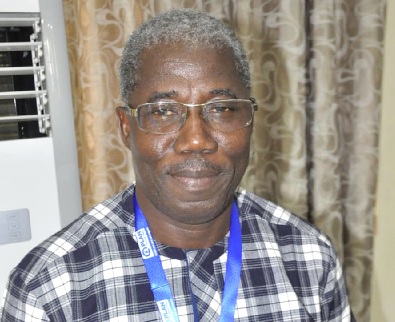
PLAN International Ghana has urged journalists to refrain from extracting stories from survivors of sexual violence while they are still in a state of trauma.
The Head of Programmes and Influencing at the organisation, Eric Ayaba, said such conduct was not only unprofessional but also deeply uncompassionate.
Mr Ayaba made the remarks last Monday at the opening of a three-day training workshop for 20 selected journalists from the Volta, Oti, Eastern and Greater Accra regions.
The training, themed: “Journalism with Purpose: Reporting Responsibly on Children, Gender Equality and Vulnerable Communities,” focused on ethical and development-oriented reporting.
He stressed that journalists had a responsibility to find innovative and ethical ways of obtaining facts, especially when a survivor was unwilling or not emotionally ready to speak.
Mr Ayaba explained that survivors of sexual and domestic violence might still be experiencing severe physical and emotional pain, and asking them to recount their ordeal could worsen their condition.
He further noted that survivors had the right to remain silent when approached by journalists.
Reporting on such cases, he added, must avoid sensationalism and stereotyping, which undermine the dignity of survivors who may require time and support to recover fully.
According to him, the dignity of survivors must take precedence over headlines; safety must come before clicks, and development must be prioritised over propaganda in the reportage of such issues.
Mr Ayaba emphasised that media reports concerning children and young people should protect them rather than expose them to further harm.
Gender-transformative reporting
“So, be responsible reporters and not just better reporters. Do not cause harm to children, girls and vulnerable adults; rather protect them through gender-transformative reporting,” Mr Ayaba urged participants.
The Gender and Sexual and Reproductive Health Specialist of Plan International Ghana, Esenam Ahiadorme, explained that gender-transformative reporting went beyond merely including women’s voices in stories.
She said it also interrogated the structural causes of inequality in society.
“Transformative reporting does not just focus on why a girl dropped out of school; it asks why and examines which systems failed her,” she said.
