

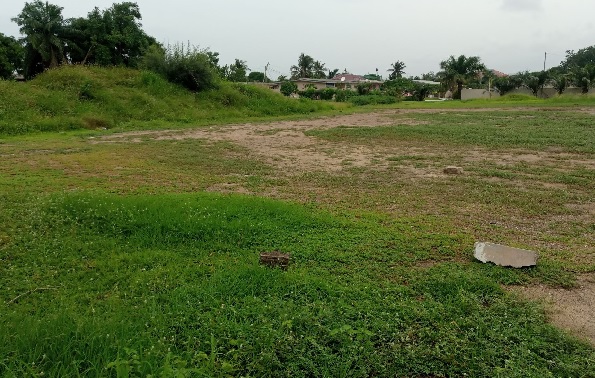
Dear Mirror Lawyer, I bought a piece of land at Adum, Kumasi. I was so excited to get that land because it lies in a busy area. After negotiations with the vendor, we entered into a contract of sale.
By the terms of this contract, I was to pay an initial instalment of one-third of the total purchase price, which I paid to the vendor.
A week later, as I was doing my due diligence and investigating the title to the land, I discovered that the vendor had sold the land to another person after signing the contract of sale with me.
I am devastated by the turn of events because I want the land, not my money, back. What are my remedies?
Moses Akoraa,
Nsawam.
Dear Moses,
A contract of sale is an agreement between a vendor and purchaser for the sale of property in which all the terms of the sale, such as location, size, price, terms of payment, handing over possession, restriction on sale to another person, and consequences for breach, among others, are agreed and binding.
After the contract for the sale of land has been completed, the purchaser becomes, in equity, the beneficial owner of the property contracted to be sold.
Equity is a legal term meaning fairness. Thus, a beneficial owner in equity means that although the purchaser may not have finished paying for the land and the property is still registered in the name of the vendor or owner, equity will assume that ownership of the land has been transferred to the purchaser and gives that owner priority over the land unless the purchaser is in breach of the contract of sale by not performing his obligations under the terms agreed.
The purchaser also has an equitable lien on the property for any amount of money paid to the vendor until a conveyance is made to him.
A vendor who enters into such a contract of sale and receives part payment of the selling price as agreed in the contract is not permitted, under the law, to rescind the contract and sell the land to another person for the same or a higher price.
Any such behaviour will constitute a breach of the contract.
One remedy open to the purchaser is to sue for possession of the property to be given to him. This is done in accordance with the equitable remedy of specific performance.
Specific performance is granted in land matters to compel a defaulting party to specifically perform its obligation under the contract where it is shown that the other party has either made a partial performance or complete performance of its side of the contract.
The court will order specific performance if monetary damages would not be adequate to compensate the party not in default. Section 36(2) of the Land Act, 2020 (Act 1036) makes it clear that the general rule for the transfer of an interest in land stated in sections 34 and 35 is subject to the rules of equity, including those relating to unconscionability, fraud, duress, and part performance.
The uniqueness of land makes the court readier to grant specific performance. The idea is that no two pieces of land are the same, as held in Bonsu v. Agyemang.
Thus, a person who pays money to a vendor who fails to deliver the land may not get similar land at the same price and in the same location; hence, the equitable remedy is ordered at the court's discretion.
Under the current law, a vendor who sells the same piece or parcel of land to more than one person is liable to prosecution and, if found guilty, to a fine, imprisonment, or both.
You duly entered into a contract of sale with the vendor for the purchase of the land in question. Since you insist on the land, equity will step in because damages would not be adequate in the circumstances.
The court can compel the vendor to convey the land to you under the terms contained in the contract of sale earlier entered into between you and the vendor.
