
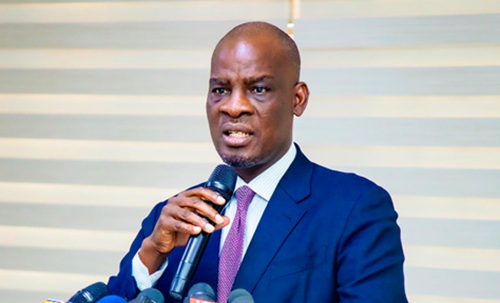
The Ministry of Education is to constitute a technical committee to review the computerised school placement process.
The announcement by the ministry comes on the heels of a call by the Ghana Catholic Bishops’ Conference (GCBC) for greater transparency, accountability and the ultimate review of the Computerised School Selection and Placement System (CSSPS).
“Following the conclusion of the current placement exercise, the ministry will establish a Technical Working Committee to undertake a comprehensive review of the placement process," a statement signed by the Minister of Education, Haruna Iddrisu, said.
The statement emphasised that the CSSPS was fundamentally a merit-based system, with merit taking precedence over protocol in the placement of qualified candidates.
The objective, it said, was to ensure that placement decisions were guided by established criteria, and that every qualified student was treated fairly within the approved placement framework.
"At the same time, the ministry recognises the need for continuous improvement and strengthening of the system,” the statement added.
It said the review would examine the various components of the system, identify areas requiring improvement, strengthen transparency and accountability, and make recommendations to ensure that the CSSPS remained credible, efficient, fair and responsive to the needs of students, parents and schools.
The ministry further reiterated that CSSPS placement was free, and that no parent or candidate was required to pay money to secure a placement or to have a placement changed.
Evidence
"Any parent or guardian who has credible evidence that an official of the ministry, the Ghana Education Service, Computerised School Selection Placement System Secretariat, Ghana Technical Vocational Education and Training or any third party is demanding money in connection with school placement is encouraged to report the matter to the appropriate law enforcement bodies for investigation, since his or her identity will be protected," it said.
The statement said the ministry remained committed to protecting the integrity of the CSSPS and ensuring that merit, fairness and transparency remained at the heart of the placement process.
GCBC concerns
In an earlier statement, the GCBC said the school placement system should be examined by technical experts, with the findings made public.
The bishops said they were concerned by complaints that students had been placed in schools unsuited to their sex, disability, circumstances or location.
The conference said no student should be sent to a day school so far from home that daily attendance would become unreasonable, costly or unsafe, and that students with disabilities should be placed in schools equipped to meet their needs.
Genuine errors, the bishops said, should be corrected quickly through accessible channels.
"We are especially troubled by allegations that parents are asked to pay money to secure places for their children.
If placement is meant to be free, no official, agent, or intermediary should request or accept payment for it.
Such allegations deserve investigation, and those found responsible should face disciplinary measures, and where warranted, criminal charges," the GCBC said in a statement signed by the President, Most Rev. Matthew Kwasi Gyamfi.
At the same time, it said, unproven accusations should not damage the reputations of honest public servants.
It said the practice of so-called “protocol” admissions also required urgent clarity.
"If places in sought-after schools are set aside through discretionary arrangements, the public deserves to know their legal basis, the number of places involved, the criteria applied, and who is responsible," the statement said.
The GCBC said there should be a strong, accessible appeals process with clear steps and time limits.
"Cases involving sex, disability, medical needs, serious distance difficulties, or administrative error should receive priority.
The government might also consider appointing an independent official to resolve complaints that cannot be settled through ordinary channels," it said.
The statement said school categories should be reviewed periodically so that they did not become a permanent hierarchy, leaving families with little confidence in lower-scale schools.
The government, it said, should invest more in buildings, teachers, laboratories, and learning materials so that quality education was distributed more evenly to reduce pressure on the most sought-after schools.
It said the placement process should be accompanied by timely and accurate information, and that parents deserved to understand how the system worked, their rights, and how they might appeal.
"Before major changes are introduced, government, the placement body, churches, schools, parents and education experts should consult regularly.
A fair placement system must not only produce fair outcomes; it must also be transparent enough for families to understand and trust," it said.
The bishops said they recognised the need for a national system giving every child fair and efficient access to good secondary education, one that was open, accountable, humane and merit-based.
It said technology could serve justice, but could not replace human responsibility or determine whether an outcome was educationally sound or morally right.
