
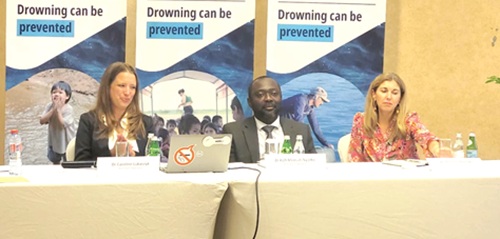
A total of 1,360 people died from drowning between 2019-2021, a study conducted by the Kwame Nkrumah University of Science and Technology (KNUST), in collaboration with the CDC Foundation, has revealed.
The data also showed that drowning occurred most frequently among males, young adults and young children, with males being four times more likely to die from drowning than females.
The study further found that adults aged 20 to 34 years and children under the age of five were at the highest risk of drowning, with rivers and the ocean identified as the most common locations where drowning incidents occurred.
The most frequent activities associated with drowning, the study said, were boating, recreational swimming, travelling near water and playing near water.
Also, none of the boating-related drowning cases reported had the victims wearing a lifejacket at the time of the incident, and many of the persons who drowned did not know how to swim or were described as weak swimmers.
Causes
“Participants identified alcohol consumption, lack of or limited use of lifejackets, lack of or poor swimming ability and limited access to swim skill training as key factors that contribute to drowning in Ghana.
“The weather was also discussed as a contributor to drowning incidents. Specifically, unpredictable wind patterns and currents were identified as important factors in drowning among fisherfolk and flash flooding was identified as a key issue affecting communities across the country,” the Executive Summary of the study made available at a media briefing ahead of the launch of the Protect Technical Package for Drowning Prevention by the World Health Organisation (WHO) in Accra last Wednesday, said.
The seven recommended policy intervention strategies for drowning prevention called for the provision of physical infrastructure that promotes safe interaction with water; strengthened rescue and resuscitation capacity for bystanders and professional responders; improved occupational safety for people working around water; enhanced transport safety standards for water travel; education in basic swimming and water safety; strengthened child-care and safeguarding systems; and improved preparedness for floods and other multi-hazard emergencies.
The executive summary of the study revealed that “Sociocultural beliefs (witchcraft, curses) were frequently identified as contributors to drowning”
Analysis
The KNUST and CDC Foundation conducted a retrospective analysis of data on fatal and non-fatal drowning cases abstracted from existing district-level administrative records and data collected through interviews at the community/household level.
Data were collected from 52 of the country's 260 districts, which were randomly selected from three strata: coastal areas, inland water areas, and dry areas without a coastline or major lake or river but containing other water bodies such as ponds, dams and wells.
Thirty-three trained data collectors extracted data on all reported drowning cases—both fatal and non-fatal—over three years, from January 1, 2019, to December 31, 2021, using records from district-level administrative offices.
The KNUST-CDC Foundation said data collectors worked with community health workers and gatekeepers – local chiefs and assembly members- to identify drowning cases in communities and conducted structured interviews with family members, friends and/or witnesses of fatal drowning cases and survivors of non-fatal drowning.
Strategies
Commenting on the study on the sidelines of the launch of the technical package for drowning prevention, one of the researchers, Prof. Emmanuel Nakua of KNUST, said one area the study had to focus on was septic tanks which were dug and later got filled with water, thereby becoming a death trap for children.
The study, he said, was a nationwide exercise through which the country was divided into three geographical areas to help select areas for data collection.
Media interaction
At the media interaction last Wednesday, the Team Lead for non-communicable diseases at the World Health Organisation's Office for the African Region, Dr Kofi Mensah Nyarko, said, among other things, that there was the need to enforce bylaws that prevented people from building in waterways, which caused flooding, leading to the death of people.
The Technical Officer for Unintentional Injury Prevention at the World Health Organisation, Dr Caroline Lukaszyk, said that in 2024, no country had zero drowning deaths and that it was a global issue.
A representative of Bloomberg Philanthropies, Rebecca Bavinger, said their goal was to train at least 1,000 children in the country.
