
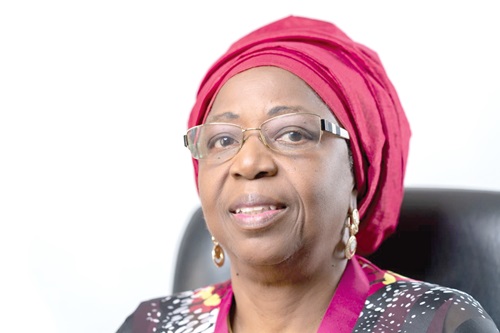
Africa can eradicate NTDs — Former Senegal Health Minister
A former Minister of Health of Senegal, Professor Awa Marie Coll-Seck, has stated that recent successes some African countries have achieved in eradicating certain Neglected Tropical Diseases (NTDs) were proof that it was possible to eradicate NTDs from the continent.
Citing some of the successes achieved, she said Ghana, Togo, Senegal and Malawi had eliminated trachoma as a public health problem; Togo had become the first African country to eliminate Lymphatic Filariasis, while Niger had also become the first country in Africa to be certified by the World Health Organisation (WHO) as having eliminated onchocerciasis, also known as river blindness.
Added to these, she said, was dracunculiasis, popularly known as Guinea Worm disease, which Africa was close to eradicating, explaining that less than 20 cases of the disease remained worldwide.
“These victories show that we can, with determination and coordination, put an end to neglected tropical diseases,” she said.
Professor Coll-Seck, who is also the Chair of Galien Africa, said this at the launch of the Fourth Annual Media Forum on NTDs organised by African Media Network for Health and Environment (REMAPSEN).
The launch, which was done virtually, saw over 100 journalists from across the continent participate in it, and speaker after speaker spoke about the devastating effects NTDs have on those affected and the communities as well.
The forum’s in-person sessions will be held in Cotonou, Benin, from January 29 to 30, 2026. Selected journalists from 35 African countries would be educated on the situation of NTDs in Africa at that event.
NTDs
Neglected tropical diseases are a group of 21 different diseases and infections that can cause significant disfigurement, disability and death.
They affect over 600 million Africans.
They cause blindness, disability and stigma but are preventable and often eliminable.
Professor Coll-Seck said NTDs matter for Africa because they strike the poorest, remote, marginalised communities; slow education, productivity and economic growth, as well as reflect weak systems, unequal access and under-investment.
She said eradicating these diseases would strengthen the preparation, prevention and response to epidemics, adding that most communities would also be strengthened.
She said to accelerate the process, Africa must integrate NTDs into national priority programmes, invest in WASH, data systems and community health, strengthen cross-border surveillance, secure African manufacturing of essential medicines and use media power to sustain political will.
She mentioned some of the obstacles to eradicating NTDs on the continent to be low political visibility, weak WASH systems, hard-to-reach communities, fragile supply chains for medicines, funding gaps after donor withdrawal and limited data for targeting interventions.
On the role the media could play to end NTDs, Professor Coll-Seck said they could break the silence, humanise stories, strengthen accountability, sustain political momentum and fight misinformation.
Speaking about the forum, the President of REMAPSEN, Youssouf Bamba, said health and environment were the poorest in news reporting because they were not really favoured.
He said that was why journalists who were into health promotion should be considered heroes and also encouraged.
The Director of Partnership and Development of Speak Up Africa, Yaye Sophietou Diop, urged the media to raise awareness against the stigma that people with NTDs suffer from and also ensure that people understand these diseases, using very simple terminology.
She also spoke about the political commitment and resource mobilisation needed to fight NTD elimination, explaining that they were diseases that could have been avoided if countries prioritised prevention.
Representing the WHO Director for Africa, the WHO Resident representative in Benin, Dr Konan Kouame Jean, said access to valuable information could accelerate prevention, strengthen public trust and support the health sector.
