
The Environmental Protection Authority (EPA) has announced its resolve to dredge sections of the heavily degraded and silted Tano River to restore its life.
It also warned against illegal mining and other activities that pollute and obstruct river bodies, which ultimately inflict mayhem on local communities.
At the peak of the illegal mining activities, some illegal miners who invaded the forest and the rivers at Samreboi and its adjoining communities used their excavators to block the river to enable them to use the excavators to cross.
These blockages dammed parts of the Tano and other rivers, causing severe flooding that displaced thousands of residents and resulted in massive property loss.
The Authority said mining in rivers remained illegal and stressed that persons found engaging in such activities would face the full rigours of the law.
The continuous illegal mining activities in the Western Region, especially in areas such as Samreboi, have resulted in preventable flooding, requiring a concerted effort to rid the country’s rivers and forest reserves of these illegalities.
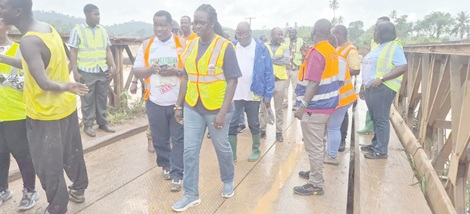
Speaking during the tour of the region, the EPA delegation led by the Chief Executive Officer of the Authority, Professor Nana Ama Browne Klutse, and other members of the district assembly took time to assess the extent of damage caused by illegal human activities.
The devastation
Prof. Klutse said it was sad to see the level of devastation caused by illegal miners to the residents, farmland, the Tano River and its banks, as well as social infrastructure; hence, the need to clear the blockage at sections of the river to allow free flow, protect lives and prevent future occurrences.
“As the Environmental Protection Authority, the EPA, as the primary regulatory body responsible for protecting and managing the environment in the country, would work to ensure sustainable development, regulate pollution, and enforce environmental laws.
The authority, she said, would not tolerate the continuous pollution or obstructing rivers in the country through illegal mining or any other form by individuals or groups of people, adding that if caught, those who carried out these illegalities would be dealt with according to the laws of the country.
The authority said that, aside from the restoration of the rivers in the area, it would also restore the degraded banks after the devastating floods.
Preliminary assessments
She said the EPA’s preliminary assessments showed that the flooding was largely caused by the overflow of the Tano River, which burst its bounds.
At present, she said the integrity of the river banks had been severely compromised, making the area highly vulnerable to future flooding and must be worked on immediately.
She said that in the heavily compromised areas, there would be the construction of concrete guards, especially around sections close to the communities, to avoid further flooding in the future.
At the engagement with the victims, Prof. Klutse expressed the hope that in the next rainy year the story should be different and urged the communities to be vanguards of the rivers, the forest reserves and the environment in general.
The EPA said its visit was part of efforts to support flood victims in Samreboi and identify long-term solutions to prevent a recurrence of the disaster.
Back at the coast
Back at the coast, the team visited some agencies and indicated its decision to redeploy its specialised Zodiac patrol boat to bolster surveillance and protection of the country’s coastlines, lakes and rivers as the country grapples with escalating water pollution and recurring flood disasters.
Prof. Klutse said the Authority was exploring a strategic partnership with the Ghana Navy during the tour of the Naval Shipyard of the Western Naval Command to operationalise the vessel, which has remained largely underutilised despite its critical environmental monitoring capabilities.
She said together they would be assessing the operational condition of the boat in the custody of the Navy and determining the most effective framework for its deployment.
She explained that while the EPA had the regulatory mandate to safeguard the environment, it lacked the specialised technical capacity to operate the vessel.
The eight-crew capacity Zodiac boat was procured in 2014 to support offshore petroleum monitoring, environmental surveillance and rapid response to oil spill incidents. However, the vessel has remained largely idle in recent years.
The EPA delegation also toured the Takoradi Container Terminals, Ghana Cement Factory and the Atlantic Terminal Services Limited (ATSL) to assess compliance with environmental regulations and operational standards.
