
Government to roll out specialist nursing programmes to tackle skills gap
The government is set to roll out four specialist nursing training programmes in four institutions to address the shortage of medical specialists in the country.
The programmes, which include endocrinology nursing, oncology nursing, nephrology nursing and critical care nursing, will be rolled out at the Ophthalmic Nursing School, the Korle Bu Nursing and Midwifery Training College, Komfo Anokye Teaching Hospital and the Tamale Teaching Hospital.
Specialist programmes
Endocrinology nursing specialises in the care of patients with hormonal imbalances and metabolic disorders, such as diabetes, thyroid diseases and pituitary conditions; oncology nurses attend to cancer patients; nephrology nurses see to kidney and renal patients, while critical care nurses, who usually work at the Intensive Care Unit, provide intensive specialised care to patients with life-threatening illnesses or injuries.
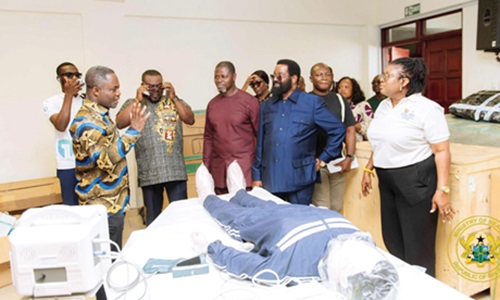
The Minister of Health, Kwabena Mintah Akandoh, who made this known during a visit to the University of Ghana Medical School in Accra last Friday, said the country produced not less than 45,000 general nurses annually, with the national training capacity estimated at about 76,000 a year.
However, he noted that the challenge had been the training of specialist nurses.
“We have trained general nurses in this country and we have a lot of them, but the big question is the specialties.
Some of these specialties are not even pursued at all,” he said.
He said the institutions would from next month begin the sale of forms to admit students for the programme.
He said more courses would later be introduced based on the human resource required nationally and internationally.
Mr Akandoh also indicated that the government had made an initial financial commitment of about GH¢8 million, which would go into setting up training infrastructure, procuring equipment and supporting the academic delivery of the courses.
Structure
The Health Minister said the programme would run for four semesters with each semester lasting between six and eight weeks.
He said although such programmes typically took up to two years to complete, the government was compressing the training into an intensive one-year programme without reducing contact hours or quality.
“The goal is to produce well-qualified specialist nurses within a shorter period to meet urgent national needs,” he said.
He added that the programme would also provide opportunities for experienced nurses who had worked closely with medical doctors in specialist areas to get formal certification.
Target
Mr Akandoh said the government was targeting to train not less than 900 specialist nurses within the first year of the programme.
“We are not going to compromise on quality because they must meet international standards.
When other countries come looking for our nurses, they don’t ask for general nurses alone, they ask for specialist nurses,” he added.
Investment
He said simulation centres and specialised laboratories which were essential for effective training had been equipped.
“You cannot train these specialties in an empty lecture theatre. You must have simulation centres and very expensive equipment. Without these labs, you cannot train specialist nurses,” he said.
He reiterated that the programme would help close existing gaps in the management of non-communicable diseases, particularly as the government implemented new health interventions such as MahamaCares.
“If you want to manage non-communicable diseases and you don’t have oncology nurses or critical care nurses, then you have a problem. This programme helps us fill those gaps,” he explained.
Additionally, he said the training of specialist nurses would enhance the country’s ability to benefit from international labour mobility, including remittances and bilateral agreements with other countries.
Mr Akandoh expressed confidence that the initiative would strengthen the country's health system and position the country as a competitive hub for specialist nursing in the region.
