
ICASA @ 35: SAA marks 35th anniversary
The 35th anniversary of the Society for AIDS in Africa (SAA), custodian and organiser of the International Conference on AIDS and STIs in Africa ( ICASA), has been marked in Accra.
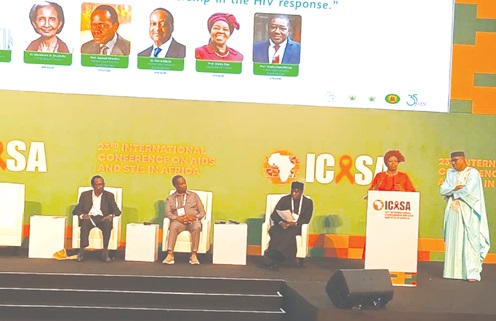
Celebrated on the theme: “Celebrating 35 years of advocacy, science and African leadership in the HIV response”, speakers in a panel discussion at the celebration shed light on the formation of the society, the challenges in the HIV response on the continent and the gains that had been made so far.
The speakers walked dignitaries and delegates at the conference — which Ghana was hosting for the first time — through the beginnings of the society in 1989 when stigma and discrimination against people living with HIV (PLWHIV) was high, when challenges with access to treatment was high, when AIDS deaths were high, to the present day when breakthroughs in medication, and easy access to testing, treatment and prevention are available.
The panel were former SAA Executive Board members, Professor Nkandu Luo, Professor Sheila Tlou, Dr Pierre Mpele, Professor Souleymane Mboup, Professor Eobert Soudre and Professor Samuel Okwares, with Dr Aliou Sylla as the moderator.
About SAA
Founded in 1989 during the fourth International Symposium on AIDS and Associated Cancers in Africa (now ICASA) in Marseille, France, SAA was established by African scientists, activists and advocates with the support of the then World Health Organisation Director, Peter Piot.
Their efforts marked a pivotal moment in bringing the fight against HIV and AIDS to the African soil and strengthening Africa’s response in global health advocacy.
The anniversary is being celebrated alongside the 23rd edition of ICASA, which Ghana is hosting.
Deemed a special edition, the 23rd ICASA is a special opportunity to appreciate the organisation’s remarkable achievements while reflecting on its progress in achieving its vision and mission.
Prof. Luo said ICASA had been a very important driver of science on the African continent, explaining that the birth of ICASA brought together scientists and clinicians who were facing the HIV patients together so that they shared their knowledge in science.
She said at the time, they had the most competent scientists who, under very difficult situations, including not having the technology, worked hard to get this far.
Community
Prof. Luo said ICASA was an important vehicle that brought science, policy and benefits to the community.
She, however, said with time, they realised that science alone was not adequate because it must be translated into the overall picture of HIV, meaning people needed to benefit from scientific findings.
She said that was why in 1999 at the Lusaka meeting they introduced the concept of community.
Prof. Lou said in 1985 when Botswana recorded the first case of HIV, there were a lot of denial because at the time HIV was seen worldwide as a disease of gay people.
She said at the time, she realised that the disease was going to stay, and that women were going to be more vulnerable because of the social environment.
Prof. Lou said as a result, in 1988 the Society for Women in AIDS was founded by great activists so that they could ensure that gender was mainstreamed in all schools and programmes, which explained how they were able to influence what had happened in terms of gender, human rights, among others.
Mr Piot paid tribute to former United Nations Secretary General, Kofi Annan, saying without him they would not have gotten this far.
He said the world had changed, and SAA needed to do more than ever to do it differently and make sure there was a new generation of leaders who supported African sovereignty.
Dr Mpele spoke about the Abuja declaration where heads of state of Africa committed to contribute 15 per cent of their national budget to health, adding that still, few countries in Africa had achieved that target.
