
The Christian Council of Ghana (CRC) has urged that the status quo regarding the operation and running of mission schools in the country should remain and not be tampered with.
The council said the proposal contained in the recommendations of the Constitution Review Committee to alter the current system was problematic.
It consequently cautioned that any attempt to “liberalise” the operation of mission schools and make them operate as circular institutions could breed indiscipline, mar the cordial relationship among the different faiths, and defeat the mission of evangelism, considered one of the key reasons for their establishment.
"There is nothing wrong with what we are doing; if it is not broken, you don't fix it.
The different faiths have co-existed nicely in Ghana," it said.
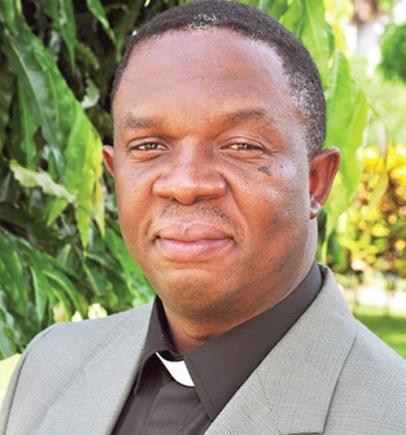
The General Secretary of the CCG, Rev. Dr Cyril Fayose, told the Daily Graphic that the mission schools need the freedom to manage their schools.
“So we want the status quo to remain. In other words, we want the freedom to control our mission schools the way we like it — to maintain the ethos and the discipline. The morals and the values of our schools must be protected.
“There should be no legislation to say that we cannot do that,” he said in response to the recommendation of the Constitutional Review Committee (CRC) on education.
CRC recommendation
Captured under the subject of “Right to Education: Religious Coercion and Discrimination in Public Schools”, the CRC said, among other things, that Article 25 (Right to Education) of the Constitution should be amended to provide that educational institutions were required to comply fully with the rights in Chapter Five, while retaining the freedom to maintain denominational identity and ethos that did not infringe the rights of students; to explicitly guarantee that no student shall be compelled to participate in religious worship, instruction or observance in any educational establishment; and state that admission, boarding access, discipline, student leadership and participation in school activities shall not be subject to direct or indirect religious discrimination in any educational institution.
Again, it said, Article 21 shall be amended to clarify that no person shall be disadvantaged or privileged by reason of religion, belief or non-belief, and the State shall not adopt any practice that coerces, presumes or promotes adherence to any religious or belief system.
Similarly, the State shall maintain equal regard for all faiths, beliefs and non-belief, and shall not, in the exercise of any public power, function or resource, adopt, privilege or advance the institutional interests of any religious or belief community.
Statute
The CRC said “Parliament should be required to enact a statute pursuant to Articles 21 and 25: Expressly confirming that all educational institutions offering education to the general public, whether publicly funded, mission-assisted, or privately operated, are bound to respect the constitutional rights of learners under Chapter Five.
This should include guarantees that participation in religious observance is voluntary, that students may opt out without penalty, and that admissions, discipline, academic opportunity and compulsory school activities are conducted on neutral and non-discriminatory terms”.
It clarified that the parental choice of a school with a religious ethos did not diminish the constitutional protections owed to learners.
Private providers, it said, might maintain their religious identity, symbols, chaplaincies and moral environment, but these might not take the form of coercive religious exercises or discriminatory practices.
Development
Responding to the development, Rev. Dr Fayose said the recommendations of the CRC were geared towards liberalising the space for education in the country.
He said that meant that whether it was a mission or a private school, they must give some basic rights to students that ensured that they could not be forced to adhere to their values and religious tenets.
That, he said, would mean that the mission schools would not be able to enforce some of their values.
He said the mission schools were the best because they believed in certain principles and values, and that they were able to do all of that because of their faith.
“Even though we can be very accommodating of people of other faiths, as was developed between the Ministry of Education, the National Peace Council and the missions, if they want us to go legalistic, I don’t think what they are proposing will work.
“If they do that, then it basically means that they are turning the mission schools into circular schools, and we have a problem with that,” he emphasised.
Ethics, values
Rev. Fayose Dr said it was because of the ethics, values and morals of the mission schools that they had become the choice of many people.
He said yielding to the recommendations of the CRC would mean that if, for instance, a traditional religious person said he or she would not go to the regular school assembly because the Lord’s Prayer would be said there, the person would need a different place for their worship.
“So this would bring indiscipline into the schools,” he said, and indicated that the status quo should remain.
The CCG General Secretary said opting to attend a particular school was a choice, and that a person could not choose to attend a school and decide to do as they pleased.
That, he said, would breed indiscipline in the schools.
