
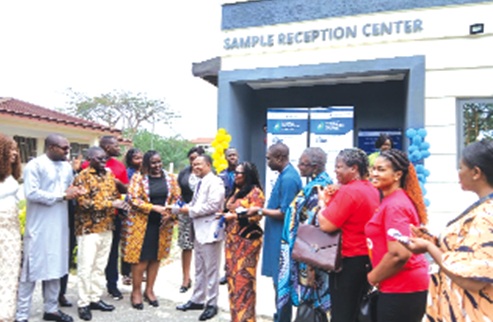
Modern sample reception centre for Noguchi
A modern sample reception centre that will receive, process, and analyse clinical and environmental samples with precision and speed, facilitate timely diagnosis and treatment for citizens, has been inaugurated and handed over to the Noguchi Memorial Institute for Medical Research (NMIMR).
The $190,000 facility, done with support from the World Health Organisation (WHO) and funding from the Gates Foundation, will serve as a central hub for specimens across Ghana and countries in the sub-region.
It will also enable a better understanding of diseases and develop new research tools to prevent and support the treatment of diseases.
With structured workflows, waiting spaces, sanitary facilities, and enhanced safety features, the facility will significantly improve sample integrity, traceability, and operational efficiency.
Beyond polio surveillance, the facility positions Noguchi to support broader public health priorities, from routine disease surveillance to outbreak investigation and environmental monitoring.
The inauguration and handing over of the facility to NMIMR were done today, February 24, by the WHO Representative in Ghana, Dr Fiona Braka.
Facility
The Director of NMIMR, Professor Dorothy Yeboah-Manu, said in November 2022, during the ongoing global polio laboratory network strengthening initiatives, the institute was identified as a beneficiary of a sample reception centre by the WHO effort team.
She said that after a technical assessment and back and forth, the project was started and is now being inaugurated.
“This project has been a shining example of partnership in action.
This facility represents confidence in the institute's mandate, capacity, and strategic importance within the regional laboratory network.
While commending the World Health Organisation and the Gates Foundation for their support, she gave an assurance that they would apply their well-established quality management systems, including robust facility maintenance practices, to ensure the proper upkeep of the facility.
Scientific hub
The Provost, College of Health Sciences of the University of Ghana, Professor Alfred Edwin Yawson, said during the height of the COVID-19 pandemic, the institute did not have a sample reception facility; as a result, they had to innovate one of their facilities to serve that purpose.
Describing the centre as a hub of scientific inquiry and innovation, he said it would help strengthen the quality management system; track and monitor every sample arriving at the centre, and prevent sample loss and also enhance efficiency in the way they work.
Dr Braka said the World Health Organisation was proud to stand with Ghana and regional partners in advancing laboratory capacity and disease surveillance.
He noted that the inauguration of the facility was a reminder of the critical role strong laboratory systems play in detecting, confirming and responding swiftly to disease outbreaks.
He added that nowhere was this more evident than in the global effort to eradicate polio.
The Director, Technical Coordination of the Ministry of Health, Dr Hafiz Adam Taher, said the facility represented a significant step forward in strengthening laboratory systems, improving biosafety, and ensuring timely and reliable diagnostic services for Ghana and the wider region.
Speaking on behalf of the Director, Public Health Division of the Ghana Health Service, the Programme Manager of the Neglected Tropical Diseases, Dr Joseph Larbi Opare, urged the WHO to expedite its accreditation to confirm Yellow Fever cases in Ghana.
