
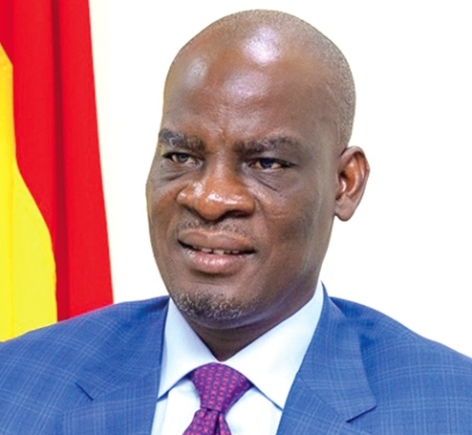
Parliament passes Education Regulatory (Amendment) Bill, 2026 - Bill makes chartering optional for private institutions
Parliament last Friday passed the Education Regulatory (Amendment) Bill, 2026, to provide a more flexible and optional pathway to chartering for private tertiary institutions in Ghana.
The object of the bill is to amend the Education Regulatory Bodies Act, 2020 (Act 1023), to dispense with the requirement of affiliated institutions to meet the six-year requirement to obtain a charter.
If assented to by the President, the bill will remove the requirement for mentored institutions to acquire a charter by August 2026, which is the deadline envisaged in Act 1023.
This will allow private universities to award their own degrees, diplomas and other related qualifications.
The bill was presented to the House and read the first time on Wednesday, February 4, this year, by the Deputy Minister of Education, Dr Clement Apaak, on behalf of the Minister of Education, Haruna Iddrisu, and was subsequently referred to the Committee on Education for consideration and report.
Justification for bill
Moving the motion for the second reading of the bill in Parliament last Friday, Mr Iddrisu said the Ghana Tertiary Education Commission (GTEC) Act, Act 1023, made charter compulsory for private universities in Ghana.
He said that, historically, under the former National Accreditation Board, a charter had never been compulsory and had always been optional.
He said the government, recognising the contribution of private tertiary institutions, which number over 79, had a significant role in providing higher education in Ghana and ensuring quality education across the country.
In his view, forcing all those institutions to charter as it appeared in the current GTEC Act, Act 1023, might lead to the collapse of some 79 private institutions that did not have the capacity to stand on their own as required by the GTEC.
He said it could even worsen the country’s current unemployment situation and become a disincentive for Ghanaians who wanted to contribute to the country's development by investing in private quality teacher education.
Quality assurance
From the institutional and programme accreditation undertaken by GTEC, Mr Iddrisu said academic audit was a significant part of what GTEC did, in addition to the quality assurance layer, which GTEC removed.
“When this charter is reintroduced to ensure the continuous quality assurance of all institutions that may not have chartered, policy approval of programmes that have been reserved for the only public chartered institution will now extend to private institutions to ensure that their programmes introduced align with government policy objectives,” he said.
The minister pointed out that the government of Ghana recognised private tertiary institutions as significant stakeholders and partners in enhancing access to quality higher education in the country.
“Mr Speaker, we just did not arrive at this.
There was an Ansa Asare Committee report which made recommendations for us to de-charter and consequently, we sought cabinet approval for the Education Regulatory Bodies (Amendment) Bill to be presented to Parliament to make charter optional,” he said.
