
Programme for financing sustainable use of natural resources ends
A Sustainable Use of Natural Resources and Energy Finance (SUNREF) programme, implemented with financial support from the European Union (EU) and Agence Française de Développement (AFD), has officially closed in Accra.
The programme marked a significant milestone in the country’s efforts to promote sustainable finance and climate-friendly investment.
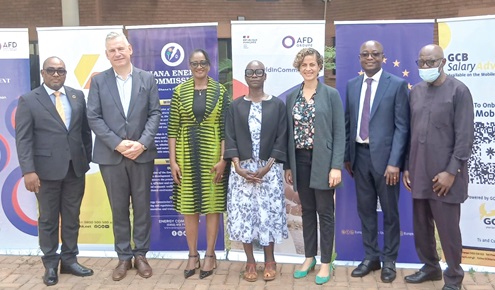
The official closing ceremony, hosted by the Energy Commission (EC), took place yesterday in Accra, with high-level government officials, representatives of the EU and AFD, partner financial institutions, including CALBank and GCB Bank, project developers and other key stakeholders in attendance.
SUNREF Ghana
SUNREF Ghana was designed to revive private sector investment in renewable energy, energy efficiency and environmentally sustainable projects, while strengthening the capacity of local financial institutions to develop and manage green finance portfolios.
The programme combined dedicated credit lines of €30 million from AFD, a €2 million technical assistance facility from the EU Africa Infrastructure Trust Fund, and €2.4 million in investment grants to improve the financial viability of eligible green investments, while encouraging the adoption of cleaner and more efficient technologies.
Under SUNREF Ghana, seven projects were completed, representing a total loan portfolio of about US$20 million.
In addition, four other projects with an estimated loan value of US$5.5 million are currently under assessment by the partner banks.
Energy Commission
The acting Executive Secretary of the Energy Commission, Eunice A. Biritwum, said the completed projects recorded significant climate and energy outcomes, including estimated annual energy savings of 7,736 megawatt hours (MWh), the installation of 0.8 megawatts (MW) of renewable energy capacity, and annual greenhouse gas emission reductions of approximately 139,020 tonnes of carbon dioxide, exceeding the programme’s initial target of 13,300 tonnes of CO₂ equivalent.
She said the programme had demonstrated how climate action could be successfully integrated with inclusive economic growth through strong partnerships and innovative financing.
“Sanref Ghana has proven that climate finance works when it is well structured and is locally anchored resolves all the uncertainties,” she said.
She thanked the EU, AFD and the French Embassy for their financial and technical support, noting that their commitment reflected a shared vision that climate action, sustainable development and private sector engagement were inseparable.
Mrs Biritwum urged stakeholders to scale SUNREF’s principles to support the country’s energy transition, climate resilience agenda and commitments under the Paris Agreement.
Ambassadors
The EU Ambassador to Ghana, Mr Rune Skinnebach, described the ceremony as not an end but a transition from a supported initiative to a self-sustaining green finance ecosystem.
He explained that SUNREF Ghana was deliberately designed to move climate action from policy statements into real investments, translating public ambition into private sector leadership.
He said beyond solar and energy efficiency, SUNREF also supported clean cooking solutions, which reduced pressure on forests and improved household health, particularly for women and children.
The Ambassador-designate of France to Ghana, H.E. Diarra Dimé-Labille, said SUNREF Ghana formed part of a broader partnership between France and Ghana, anchored on sustainability, innovation and people-centred development.
Referring to a flagship green building supported under the programme, the Project Coordinator, Mr Ebenezer, said the project had achieved energy savings of more than 20 per cent, demonstrating the practical and commercial viability of energy-efficient construction in the country.
