
UCC, University of Bologna deepen Africa–Europe ties with advanced skills course
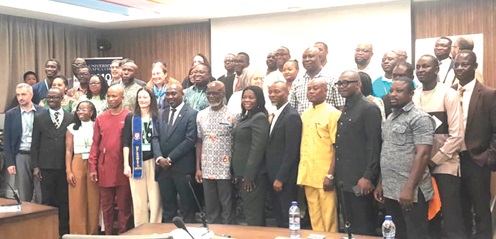
The University of Cape Coast (UCC), in collaboration with the University of Bologna, Italy, has organised an advanced skills course aimed at strengthening a sustainable and equitable Africa–Europe cooperation in higher education, research and community engagement.
The week-long programme, hosted at UCC, brought together delegates from six African universities, including the University of Zambia, the University of Nairobi, and the University of Pretoria.
The rest are the University of Witwatersrand and the Université Cheikh Anta Diop of Dakar, Senegal, who were joined by participants from the University of Bologna under the UNIT Africa Project.
The project is funded through Italy’s National Recovery and Resilience Plan with support from the European Union.
Opening
Opening the programme, the Dean of the Office of International Relations at UCC, Professor Samuel Bert Boadi-Kusi, described the initiative as a major milestone in the long-standing partnership between the two universities.
He explained that although early collaborations existed, the relationship gained momentum after the signing of a Memorandum of Understanding (MoU), following UCC’s International Partners Week in 2004.
“It is through this collaboration that the University of Bologna found UCC worthy to host this important programme”, Prof. Kusi said, and added that the course underscored UCC’s commitment to internationalisation and regionalisation.
He stated that the programme would deliberate on the future of Africa–Europe cooperation in higher education, with a focus on sustainable partnerships, skills development, academic and research mobility, and knowledge co-creation to address development challenges.
He added that the course would also strengthen South–South collaboration among African institutions, an area that had often been overlooked in international academic engagements.
A professor of African History at the University of Bologna, Prof. Karin Pallaver, said the Advanced Skills Course was part of a broader transnational education agenda to enhance collaboration between Italian and African universities.
She explained that the UNIT Africa Project supported teaching and research mobility, joint and double degree programmes, student exchanges and advanced skills training, all aimed at building long-term, mutually beneficial partnerships.
“This is a very important moment to strengthen equitable partnerships between African and European universities,” she said, stressing the need for universities to play a central role in development planning, innovation and policy engagement.
Prof. Pallaver added that participants would work across three thematic tracks, international mobility, collaborative research, and university society engagement, supported by plenary lectures, group discussions and practical case studies.
The programme would also include community engagements and visits to selected agricultural projects, as well as cultural tours to historic sites, including the Cape Coast Castle and the Kakum National Park.
The Acting Vice-Chancellor of UCC, Prof. Denis Worlanyo Aheto, highlighted internationalisation as a pivotal pillar in transforming higher education and called for enhanced collaboration among African universities to foster shared learning and development. He emphasised the importance of trans-African education, encouraging students from across the continent to study at African institutions to cultivate context-relevant knowledge and strengthen the continent’s academic capacity.
“Internationalisation must not only look outward but also inward by promoting learning across African institutions so that our students can learn from African realities,” Prof. Aheto stated.
The Acting Vice-Chancellor added that UCC currently maintains over 140 active partnerships across Africa, Europe, Asia and North America, covering student mobility, staff exchanges and joint research.
“These partnerships position UCC as a globally networked university while remaining committed to Africa and its development needs,” he added.
Prof. Aheto said the advanced skills course was expected to produce actionable ideas and partnerships that would position participating institutions as agents of change in higher education, research and community development across Africa and Europe.
