
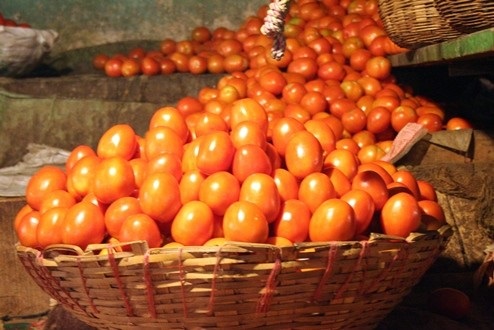
Govt intensifies efforts to boost local tomato production – MoFA
The government has intensified efforts to boost local tomato production and reduce Ghana’s reliance on imports through a series of targeted support programmes for farmers, the Tema Metropolitan Director of Agriculture, George Batse, has said.
According to Mr Batse, the Ministry of Food and Agriculture (MoFA) is implementing interventions that include the distribution of subsidised high-yield hybrid tomato seeds, technical training for farmers and the promotion of dry-season cultivation through improved irrigation systems.
In an interview, he said the measures form part of broader efforts to address recurring tomato shortages, stabilise market prices and strengthen national food security.
“The objective is to improve local production and reduce the country’s reliance on imported tomatoes,” Mr Batse said.
He explained that the ministry is encouraging farmers to adopt improved agronomic practices, including proper seed selection, nursery management, pest control, fertiliser application and post-harvest handling.
Mr Batse expressed optimism that the introduction of improved seed varieties would increase yields and enhance the quality of locally produced tomatoes.
He added that government support for year-round cultivation, particularly in northern Ghana, is being strengthened through irrigation projects aimed at reducing seasonal supply shortages that often drive up prices.
A tomato farmer from Nanton in the Northern Region, Abdullah Alhassan, welcomed the interventions, saying improved access to quality seeds and technical support could significantly boost production.
He noted that initiatives such as the Feed Ghana Programme and the Vegetable Development Project, known as Yeredua, have the potential to improve productivity and strengthen the local tomato value chain.
However, a vegetable farmer from Kumbungu, Saada Adams, identified inadequate irrigation infrastructure as a major obstacle to increased tomato production.
She said the lack of functional dams and irrigation facilities limits farmers’ ability to cultivate tomatoes during the dry season, when market demand is often highest.
Madam Adams also called for greater access to climate-resilient seed varieties and continuous technical training to help farmers improve yields and competitiveness.
She observed that Ghanaian tomato farmers generally achieve lower yields than those in some neighbouring countries, including Burkina Faso, due to limited access to quality inputs and modern farming techniques.
Agriculture experts say sustained investment in irrigation infrastructure, farmer training and improved planting materials will be critical to increasing local tomato production, reducing imports and ensuring a stable supply of the crop throughout the year.
