
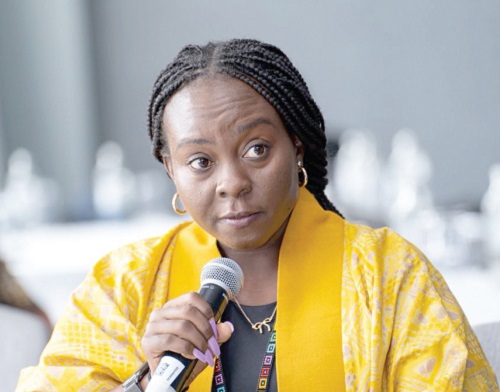
Ending corruption, unclear campaign funding: State funding of parties urgent — Abena Addo
The Programmes Officer of the Ghana Centre for Democratic Development (CDD-Ghana), Vera Abena Addo, has stated that the idea of state funding for political parties in Ghana is more urgent because of ongoing concerns about corruption, unclear campaign funding, and the increasing commercialisation of politics.
“The main goal should be to build a system that encourages accountability, supports strong democratic institutions, and benefits the public,” she told the Daily Graphic in an interview in Accra.
She said a study by CDD-Ghana in 2001 and 2022 showed that some political funding came from illegal sources, such as organised crime, money laundering, bribery, corruption, shady procurement, and illegal mining.
“This is worrying because financiers might use their money to secure protection from criminal activity, seek special treatment, obtain favours, and negatively influence government policies and decisions. This can weaken institutions and undermine public trust in governance,” she stated.
Monetisation
Ms Addo said she was of the firm conviction that public funding could help reduce the over-monetisation of politics, which threatened the current democracy.
She explained that if accompanied by other reforms, including regulating political funding, capping expenditures and defining campaign period, it would make our politics more transparent and accountable.
“If the state gives parties some financial support, it could lower the temptation for illegal fund-raising and vote-buying.
It would also help smaller parties compete and encourage all parties to focus on policies and long-term goals instead of just winning elections,” she stated.
Ms Addo said the debate should focus on protecting democracy and making sure political competition was fair and transparent.
Democracy fund
Ms Addo explained that because the issue was complex, a mixed approach was recommended instead of broad, unconditional funding.
She said funding political parties could start by offering indirect support, such as fair access to state media, tax breaks for small donations, and help with policy development and training for parties.
She noted that the Constitution Review Committee (CRC) proposed a Democracy Fund to support political parties’ research, development of policies and capacity building.
Ms Addo said if direct funding were to be used, it should come with strict conditions.
“Money could be given based on election results, financial transparency, and efforts to include women, youth and underrepresented groups in politics,” she said, adding that, “funding could also be set aside for specific uses like civic education and policy research, not just general party expenses.”
Smaller parties
Ms Addo said Ghana’s two main parties usually had more money and resources, making it difficult for smaller or new parties to compete fairly.
She said public funding could give the smaller parties the basic resources they need to organise, reach voters, and take part in political discussions, explaining that “this could help increase political diversity and give voters more choices.”
Effectiveness
Ms Addo noted that state funding would only work if oversight institutions were strong.
“The Electoral Commission and other regulators need enough resources and authority to check compliance, enforce transparency, and punish violations when needed.”
She said if state funding came with strict rules, it could make party operations more transparent and improve internal party governance.
“Parties that get public money could be required to share their financial records, go through independent audits, the state could also enforce the inclusion of women, youth, and people with disabilities in their leadership, and meet clear accountability standards,” she said.
Risks
Ms Addo, however, pointed out that state funding also had risks.
“One main worry is that guaranteed public money could create an environment for people to seek employment in political parties and lead to the misuse of state funds,” she said, and noted that “more importantly, there’s little interest or limited citizen support of state funding.”
