


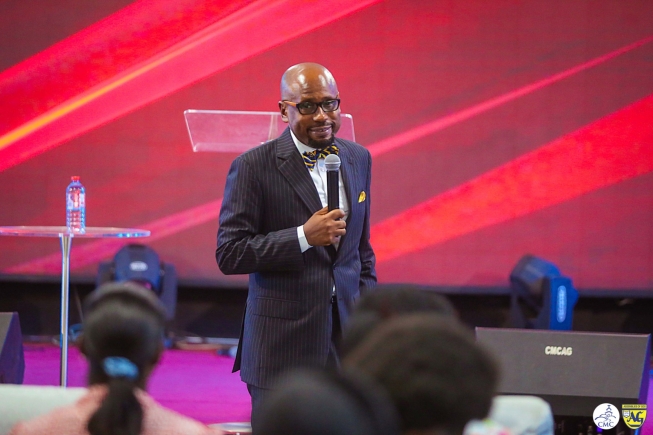
‘AI does not replace fiduciary wisdom’ — Professor Hinson challenges Ghana’s boards
Professor Robert Ebo Hinson has called on corporate boards in Ghana to treat artificial intelligence (AI) competence as a core governance requirement rather than a technological add-on, warning that directors who fail to build AI literacy risk weakening oversight and strategic relevance.
He delivered the message during a public lecture at the Corporate Dialogue Series organised by the Institute of Directors Ghana on February 25, 2026, at the National Insurance Commission Conference Room in Accra.
The lecture formed part of a book launch ceremony at which Mr Justice Awuku-Sao officially published five books — four centred on governance and leadership, and one examining the sensitive subject of emotional cheating and its impact on marital breakdown. The event drew board members, corporate executives, governance professionals, academics and members of the business community.
In his address, Professor Hinson argued that AI literacy is no longer optional for board members but a foundational requirement for effective governance in an increasingly complex, data-driven economy. He cautioned against viewing AI as a passing technological trend, insisting instead that it should be embraced as a strategic tool that strengthens oversight, foresight and accountability at board level.
He explained that AI enables directors to move beyond passive consumption of board papers towards deeper interrogation of institutional data. By converting raw information into actionable intelligence, AI tools can identify hidden patterns, detect anomalies and support predictive performance monitoring. This, he noted, empowers board members to ask more rigorous, evidence-based questions and reduces overreliance on carefully curated executive summaries.
On risk oversight — which he described as a board’s sacred duty — Professor Hinson highlighted AI’s capacity for real-time compliance monitoring, fraud detection, cybersecurity surveillance and ESG risk analysis. He stressed that AI-enabled boards are better positioned to detect emerging threats early, helping to prevent reputational and financial crises.
He further underscored the importance of continuous performance monitoring made possible through AI systems. Rather than depending solely on quarterly reports, directors can access early warning indicators relating to revenue forecasting, cost leakages, operational inefficiencies and margin erosion. This real-time visibility, he explained, allows boards to intervene more strategically and proactively.
Addressing long-term planning, Professor Hinson pointed to AI’s potential in scenario modelling and strategic simulations. Through disruption forecasting, competitive intelligence analysis and capital planning projections, boards are able to test multiple future scenarios before committing to major decisions. In his words, this capacity transforms boards from guardians of the present into architects of the future.
He also emphasised that AI enhances decision credibility without displacing human judgement. Benchmark comparisons, option-ranking models, probability simulations and stakeholder sentiment analytics provide additional layers of insight that make board decisions more defensible and transparent.
Encouraging Ghanaian boards across financial services, telecommunications, public institutions, family businesses and state-owned enterprises to embed AI competence into board induction and continuing professional development, Professor Hinson concluded: “Artificial Intelligence does not replace fiduciary wisdom. It sharpens it. The future belongs to boards that combine human discernment with intelligent systems.”