
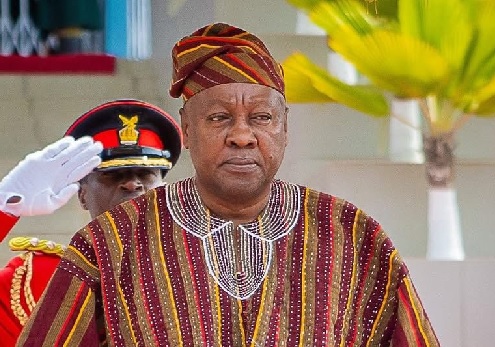
President John Dramani Mahama has highlighted the crucial role of nationalism, collective resolve and unity of purpose in advancing the country’s development during his 2026 State of the Nation Address (SONA) in Accra on Friday, February 27.
Reflecting on a recent diplomatic and cultural incident in Zambia, he emphasized how unified action and a shared national identity turned a potential embarrassment into an opportunity for international goodwill.
Below is the speech.
Mr Speaker, as I conclude, during my recent trip to Zambia, we saw what a united Ghana can achieve on the global stage.
A simple mislabelling of our culture could have reduced us to a punchline. Instead, we moved with speed and confidence
We corrected the record. We turned what was supposed to be ridicule into reach.
We turned confusion into connection. We turned what could have been a negative social media trend into a handshake of friendship with our Zambian brothers and sisters.
Mr Speaker, for most people, that episode was just a fleeting social media frenzy.
Yet, it served a greater purpose. It showed a nation that understands its brand equity. It showed citizens aligned around a common identity.
It showed a country that knows who we are and refuses to be defined by others.
But let us be honest. Unity in moments of cultural pride has proved easier than unity in moments of political disagreement.
If we can mobilize that same collective resolve for our development agenda, we will see real progress.
And that mobilization is possible because we are the descendants of a people who united against political subjugation. We resisted economic exploitation and we fought colonial oppression.
Mr Speaker, our pursuit of national development today demands that same unity of purpose.
We must reject misrepresentation and distortion that detract from our collective progress. We must guard our development as firmly as we guard our cultural identity.
We must act as one people with one purpose. Mr. Speaker, in public life, there is a simple maxim we are all very familiar with. And it says that the buck stops with the president.
Mr Speaker, I not only agree with this. Every day I hold office of president, I live by that statement that the buck stops with me.
The ultimate responsibility for the direction of this nation rests with the office that I hold.
And I will never shirk that duty. But nation building is not merely a question of who provides the strategic direction and who bears the final responsibility.
It is a long chain of efforts that carries intent into reality from policy conception to laws enacted, to resources mobilized, to services delivered, to value created or found in workshops, in classrooms, in markets, and in enterprises across our land.
Mr Speaker, it is here that the strength of a people reveals itself. It is in the countless acts of competence, integrity, and industry, by citizens of every calling, whose work turns national purpose into lived reality.
Mr Speaker, while the buck may stop with me, the work of nation building goes beyond that.
Through the labour, enterprise, and civic spirit of millions of Ghanaians whose daily efforts give policy life.
Mr Speaker, I will continue to carry the weight of final accountability. Can I ask in equal measure that our citizens bring their full measure of energy skills and patriotism to the common task of advancing our country? That is how nations are built.
That is how economies grow. No policy can substitute for civic duty. No program can replace the quiet discipline with which millions of Ghanaians sustain their families, serve their communities, and carry this republic forward each day.
Mr Speaker, we are sometimes tempted to judge our nation only by our failures and our difficulties.
But a country is not defined solely by its difficulties. It is defined by the choices its people make in response to those difficulties.
Repeatedly throughout history, the Ghanaians have chosen steadiness over despair, cooperation over division, and purpose over cynicism.
That is the deeper strength on which our future rests. We've faced testy moments before, and we have overcome them.
We've gone through periods of economic strain, transitions that have demanded much from our citizens and our public servants alike.
And Mr Speaker, there's an African proverb that says, however long the night is, the dawn will break. Mr. Speaker, the dawn is breaking for Ghana.
The moment we are in requires not only endurance, but also action. It reminds us that renewal belongs to those who prepare for the morning, while others still speak up and look back at the darkness. For Ghana today, that dawn is not a promise we must recite.
It is a reality we must build into our institutions. Into our economy. And in the ethics of responsibility we pass on to the next generation.
So let us live each day mindful that the Republic is larger than any one political party, any office, any individual.
This Republic belongs equally to the farmer, the trader, the teacher, the nurse, the artisan, the entrepreneur, the parliamentarian, and the young citizen, and the elderly and retired personnel.
Mr Speaker, each of these people has a stake in our nation and each one has a duty. Each has a claim on the future we are shaping together.
Mr Speaker, nations endure not because they are spared trial, but because their people refuse to surrender to trial.
Ghana has been tested before. We did not surrender. We will not surrender now.
And so with gratitude for how far we have come, and with a resolve for the work ahead, I say, Mr. Speaker, the state of our nation is resilient.
The state of our nation is renewing. And our nation is firmly in the hands of its people.
Our nation is on the brink of takeoff. And so ladies and gentlemen, passengers, fasten your seatbelts. I thank you for your attention.
