


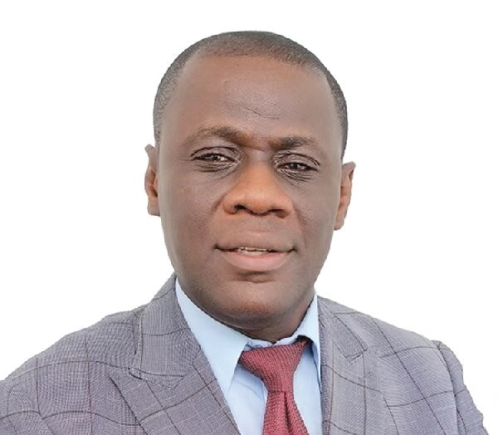
Exit Statement: What I would do with GH¢1,000 (1)
Many people believe wealth begins with money. In reality, wealth begins with the mind. Across history, individuals who transformed their finances, health, relationships and influence did so first by transforming how they think.
Reading and learning have been the quiet engines behind many global success stories.
In Ghana, where many households and businesses operate with limited capital, the difference between struggle and progress often lies not in how much money is available but in how well the mind is prepared.
If given GHS1,000, the wisest use would be to invest it in reading, learning and knowledge acquisition that compounds over time.
Read and grow rich
Read and Grow Rich, inspired by Napoleon Hill’s philosophy, teaches that reading is not merely an academic exercise but a strategic investment in one’s future.
The book emphasises that ideas are assets. When the mind is exposed to proven principles through books, it begins to recognise opportunities that were previously invisible. Reading builds confidence, discipline and clarity of purpose.
Another central lesson is that knowledge compounds. Just as money grows with interest, learning accumulates through repeated exposure to ideas.
A reader becomes better at decision-making, problem-solving and long-term planning.
Finally, Read and Grow Rich stresses application. Reading without action produces no change. Applied knowledge leads to improved income, stronger relationships, healthier habits, and sustainable wealth.
Why reading and learning matter
According to development studies, many small businesses fail not because of a lack of capital, but because of weak financial literacy, poor planning and limited market knowledge. Reading addresses these gaps at a low cost.
A household that reads about budgeting and savings plans is better able to manage income shocks.
An entrepreneur who reads about pricing, customer care and digital tools reduces losses and improves profitability. Knowledge turns GHS 1,000 into intellectual capital.
The power of reading
Successful people across sectors consistently testify that books shaped their thinking and decisions.
Below is a representation of how reading influenced renowned personalities.
Knowledge as capital
Peter Drucker described knowledge as the most important economic resource. For Ghanaian entrepreneurs, this means that reading and learning are not optional extras, but core business assets.
An entrepreneur who understands financial records, customer psychology and market trends makes fewer mistakes and adapts faster.
GHS 1,000 spent on learning can save tens of thousands of cedis in poor decisions.
From personal learning to institutional impact
Institutions such as technology and training centres begin with ideas, not buildings. Knowledge shapes curriculum, systems, and strategy.
GHS 1,000 invested in learning materials, pilot training, or curriculum development can be the seed for larger initiatives that impact communities.
Booker T. Washington believed education was the foundation of economic freedom. That belief remains relevant for Ghana today.
Making home ownership a reality through reading and learning
Home ownership in Ghana has long been seen as a reward for a lifetime of work rather than a structured financial goal that can be achieved deliberately.
For many employees, entrepreneurs and young families, the dream of owning a home feels distant amid rising land prices, construction costs and limited access to affordable long-term financing.
Yet history shows that home ownership has never been accidental. It has always been the result of discipline, sacrifice, collaboration and smart financial planning.
Home Ownership
In most developing countries, home ownership emerged through incremental effort rather than instant acquisition.
Families saved slowly, built in stages and relied on community support rather than formal mortgages.
This self-build culture dominated because financial systems were underdeveloped and long-term credit was scarce.
In Ghana, this tradition created strong ownership values but limited speed and scale. Over 90 per cent of homes were historically built through personal savings and informal financing. While this preserved independence, it excluded salaried workers and young entrepreneurs who lacked land or upfront capital.
The Ghanaian reality
About 42 per cent of Ghanaian households own their homes, while a significant proportion remain renters or live in family properties.
In cities, rent can absorb up to half of a monthly income, leaving little room for savings.
Mortgage penetration remains low, with housing finance accounting for around one per cent of GDP. This reflects both affordability challenges and limited financial planning among prospective homeowners. Many households focus on monthly survival rather than long-term asset accumulation.
The solution lies not only in policy reform but in deliberate financial behaviour