
Private water service providers operating outside the national utility system have cautioned that recent gains in access to safe drinking water risk slowing, as declining donor funding and persistent system losses put pressure on operations.
The warning comes as operators continue to expand services across the country, reaching an estimated 2.1 million people in all 16 regions through water kiosks, standpipes and household connections.
Data presented at a sector forum indicated that about 93,000 people were added in 2025, alongside new systems, pipeline extensions and upgrades to existing facilities.
The Chief Executive of Safe Water Network, Mr Chris Williams, said the sector could no longer rely heavily on grants.
“The need to move beyond grants is not just about sustainability and efficiency. It is also a survival strategy,” he said, adding that organisations unable to adjust could merge or shut down.
Mr Williams noted that the global financing landscape had changed, with providers now expected to depend more on internally generated revenue and alternative financing options.
He said access to funding would depend on operators’ ability to demonstrate efficient revenue collection and repay loans.
The Ghana Country Director of Safe Water Network, Mr Charles Nimako, said the sector was moving from experimentation to large-scale delivery.
“We are seeing a clear shift from innovation to practical application. The conversation is no longer just about innovation; it is about execution, coordination and readiness,” he said.
Mr Nimako said expanding safe water delivery now goes beyond infrastructure, stressing the need for efficient and data-driven systems, as well as better alignment among public institutions, private operators and communities.
He identified non-revenue water as a major concern, with losses from leakages, faulty meters and illegal connections reaching between 40 and 45 per cent in some systems.
“If you are running a business where you are wasting 20 to 30 per cent of your output, there is no way you can be efficient or profitable,” he said.
He explained that while illegal connections are often blamed, much of the losses stem from undetected leakages and operational weaknesses.
Pilot measures, including monitoring technology, have reduced losses in some areas to about 25 per cent.
The Head of Partnerships and Business Development at Safe Water Network, Mr Joseph Ampadu-Boakye, said the shift from stand-alone kiosks to piped systems with household connections was improving reach but also creating new operational difficulties.
He said managing large numbers of connections makes manual supervision difficult, increasing the need for remote monitoring and real-time data.
Concerns were also raised about the impact of illegal mining on water quality, especially in areas that depend on surface water.
Mr Nimako said pollution from mining activities was increasing treatment costs and posing a risk to long-term water security, although groundwater-based systems had so far been less affected.
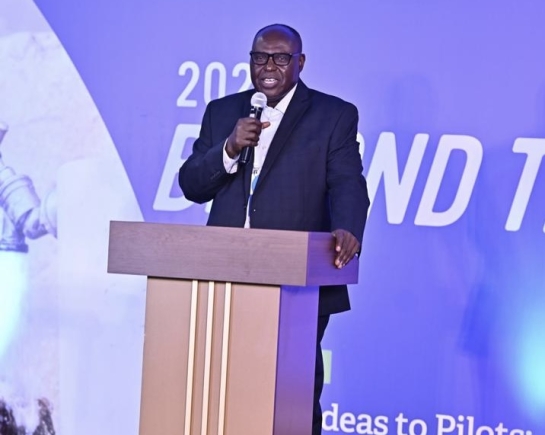
The issues were discussed at the 16th Beyond the Pipe Forum organised by Safe Water Network in Accra on Wednesday, March 18, 2026.
In a speech, the Minister for Works, Housing and Water Resources, Mr Kenneth Gilbert Adjei, said government would continue to invest in water infrastructure and protect water bodies from illegal mining.
“Government alone cannot meet the growing demand for water services,” he said, pointing to the role of private and community-based operators in underserved areas.
He called for practical approaches that can be expanded to improve water service delivery nationwide.
Mr Williams also drew attention to a gap between policy and implementation, noting that while policies exist, putting them into practice remains a challenge.
He suggested testing pilot approaches in selected districts to assess how different actors can work together to expand services.
A member of the Safe Water Network India Advisory Council, Mr Sanjiv Chadha, said the global water crisis persists despite available solutions.
“No one can go it alone,” he said, urging joint action across sectors and countries.
Mr Nimako said Ghana has the opportunity to expand decentralised water systems in a sustainable manner, but added that this would depend on improving efficiency, strengthening revenue collection and attracting investment into the sector.
