


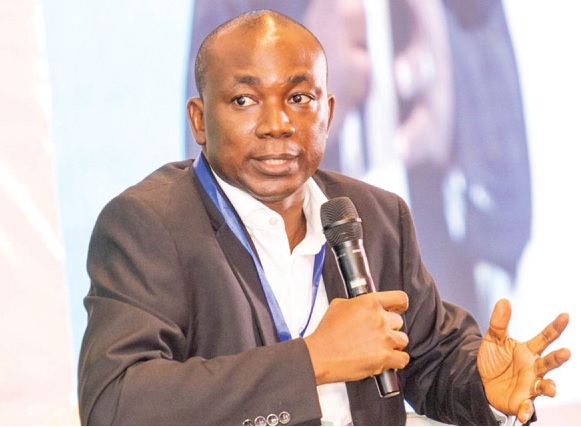
A Professor of Finance at the University of Ghana Business School, Godfred Bokpin, has cautioned the government against rushing to open its domestic bond market to foreign investors, warning that such a move could affect Ghana’s standing under its programme with the International Monetary Fund.
Speaking on Joy FM on Tuesday, March 3, 2026, Prof. Bokpin said allowing offshore participation in domestic bond issuances could lead to part of Ghana’s domestic debt being classified as external debt, with implications for debt sustainability assessments.
He said that although the government’s return to the bond market was timely, the question of whether foreign investors would be allowed to participate required careful consideration.
“The question is whether the domestic issuance will also be open to foreign investors or offshore. Government will have to watch that,” he said.
Prof. Bokpin explained that recent fiscal and monetary measures had created conditions favourable for re-entry into the bond market.
He said public expenditure had been reduced by more than GH¢10 billion since 2025, while tighter monetary policy and foreign exchange interventions had helped bring inflation down to 3.8 per cent by the end of January 2026.
He said these developments had left the financial system with excess liquidity and limited investment options, as treasury bill rates declined and banks remained cautious about lending to the private sector.
Prof. Bokpin noted that the 2026 budget projected gross financing needs of about GH¢64.3 billion, which the government intends to raise from the medium to long-term segment of the market.
“This is the right time for government to enter the market. Rates are low, and investors are looking for safe instruments,” he said.
He warned that opening the bond market to offshore investors could pose risks, particularly as Ghana’s external debt restructuring under the G20 Common Framework is not yet complete. He said offering favourable terms to new foreign investors could raise concerns among existing creditors.
Prof. Bokpin also pointed to a technical risk in the International Monetary Fund's assessment of debt sustainability. He explained that if foreign investors hold domestic bonds, those instruments could be treated as external debt in IMF calculations, potentially affecting Ghana’s debt indicators.
“Chances are that that will be classified as part of external debt, and that could affect your assessment along that line,” he said.
He noted that although Ghana met some conditions to exit the high-risk debt distress category in October 2025, the IMF maintained its classification due to concerns about liquidity pressures and broader economic risks.
Prof. Bokpin said any move that increases external debt indicators could complicate Ghana’s efforts to improve its debt profile under the IMF programme.
He added that while the Ministry of Finance appears satisfied with current market conditions, caution is needed to avoid unintended consequences.
“The ministry is happy about entering the market because the conditions are right. Government will be able to reopen the market and secure rates consistent with its medium-term debt strategy,” he said. “But on the offshore question, government will have to watch that.”