


Time to begin 24-Hour Economy journey
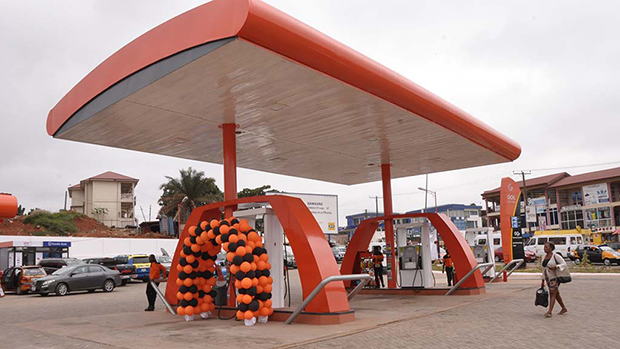
The National Petroleum Authority (NPA)'s decision to pilot a 24-hour economy at selected fuel stations, supported by a dedicated steering committee, has opened an important national conversation.
While the initiative is still in its early stages, it sends a clear signal that Ghana must begin to rethink how it uses time, infrastructure and labour to drive growth.
A country that largely shuts down after dark cannot expect to compete in a global economy that never sleeps.
Fuel stations are a logical starting point. They already operate long hours, serve transport and logistics chains, and support both households and businesses.
Extending this model more deliberately shows how economic activity can be spread throughout the day, easing congestion, improving productivity and creating new jobs. But a true 24-hour economy cannot be built on fuel retail alone.
It requires commitment from major companies across key sectors to keep value chains moving beyond conventional working hours.
Telecommunications, banking, manufacturing, logistics, retail and healthcare all have strong reasons to embrace round-the-clock operations. Companies such as MTN Ghana, Telecel Ghana and AirtelTigo already provide essential services at all hours.
The next step is to expand support services, customer care, maintenance and enterprise solutions into full 24-hour systems.
Financial institutions such as Ecobank Ghana and GCB Bank can deepen night-time banking, trade finance processing and SME support to keep businesses running without interruption. Manufacturing and logistics firms also stand to benefit.
Running multiple shifts improves asset utilisation and lowers unit costs, while creating employment for thousands of young people.
Retail chains, cold storage operators, ports and transport companies can spread demand more evenly, reduce bottlenecks and improve service delivery.
For workers, a structured 24-hour economy offers more flexible job opportunities than informal hustling or overcrowded recruitment exercises for limited public-sector roles. However, this transition must be carefully managed.
Worker safety, fair wages, transport availability and reliable power supply are non-negotiable.
The government has a role in providing incentives, security and infrastructure, while regulators must ensure standards are upheld.
The private sector, on its part, must see this not as a burden but as an investment in efficiency and growth.
The NPA’s pilot shows that a 24-hour economy is not just a slogan but a practical possibility.
What Ghana needs now is leadership from its biggest companies to scale the idea.
If more sectors commit to operating beyond daylight hours, the economy can grow faster, absorb more labour and make better use of existing infrastructure.
The question is no longer whether Ghana can run a 24-hour economy, but whether its major businesses are ready to lead it.