

UNTIL last Tuesday, for weeks, the conversation around this year’s Telecel Ghana Music Awards (TGMA) shifted from where it should have been—on nominees, performances and bold predictions to something far less glamorous, yet deeply unsettling: venue uncertainty.
And that shift should worry anyone invested in the future of Ghana’s music industry.
The TGMA is not just another date on the entertainment calendar. Since its inception in 1999, it has grown into the country’s most prestigious music platform—one that celebrates excellence, shapes careers and projects Ghanaian music onto the global stage.
For many artistes, a TGMA win is more than a trophy; it is validation, elevation and, often, transformation. For fans, it is Ghana’s grandest night of music. Which is why the recent back-and-forth over this year’s venue felt so jarring.
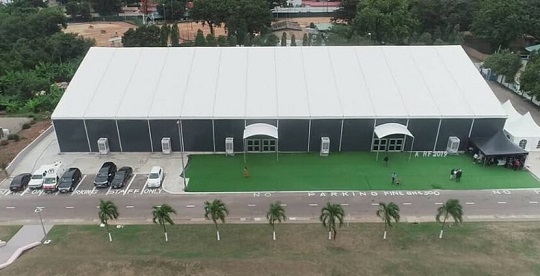
It began when the scheme’s PRO, Robert Klah, revealed in a media interview that organisers had no confirmed venue for the May 9 event. The usual host, the Grand Arena at the Accra International Conference Centre (AICC), was reportedly unavailable due to government plans to reclaim the land.
The reaction was swift and anxious.
How does an event of this scale find itself without a home just days to showtime?
In an attempt to steady nerves, organisers soon announced a new venue—the Palms Convention Centre at the La Palm Royal Beach Resort. For a moment, there was relief. A sense that order had been restored.
But it didn’t last. Before confidence could fully return, another twist emerged: the awards were heading back to the Grand Arena after all.
Organisers have framed the decision as a reflection of the event’s “growing scale and ambition,” citing the need for superior technical infrastructure and greater audience capacity. That may well be true. But the sequence of events has revealed something far more troubling than a logistical shuffle. It has exposed a structural weakness.
Why does a country with a thriving entertainment industry still struggle with venue reliability for major productions? Why are organisers of high-profile events often left juggling last-minute logistics? And what does this say about long-term investment in creative arts infrastructure?
Over the past decade, Ghana’s entertainment industry has expanded in both scale and ambition. Concerts are bigger. Productions are bolder. Audiences are more discerning. Yet the infrastructure underpinning this growth remains worryingly fragile.
The uncertainty surrounding TGMA27 is not just an isolated planning hiccup; it is a symptom of a deeper disconnect between creative progress and infrastructural support.
Graphic Showbiz, therefore, believes this moment should not be dismissed as a temporary inconvenience. It should be treated as a turning point.
If Ghana is serious about positioning its creative industry as a pillar of national development, then investment in world-class, purpose-built event venues must move from aspiration to urgency. This is because a thriving creative sector cannot stand on uncertainty.
Talent may draw the world’s attention. Applause may sustain momentum. But without strong, reliable foundations, even the brightest spotlight risks flickering.
And Ghana cannot afford for its biggest stage to feel this uncertain.
