

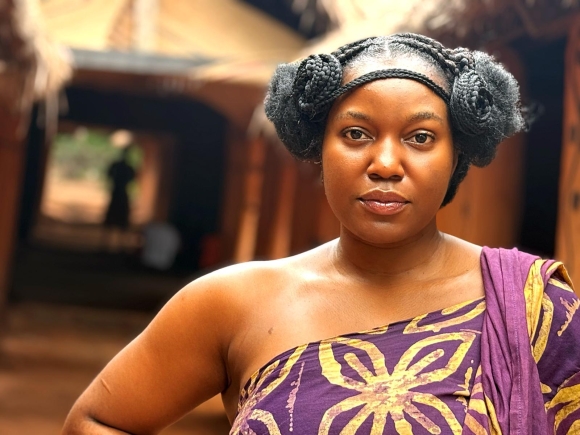
‘Ghanaian stories deserve better’ – Jessica Larny calls for investment in local films
Actress and boudoir model Jessica Larny has said the biggest difference between English-language films and local dialect productions lies in storytelling and production style. Her reflection comes after she landed the lead role in the TV series M'asaase.
Speaking to Graphic Online on Monday, Jessica explained that English productions tend to be structured and formal, while local dialect films are fast-paced and organic.
“Both have their strengths. Working in both spaces has taught me adaptability and discipline,” she said.
Jessica said her move into local dialect films was intentional, even though she is not fluent in Twi.
“I wanted to challenge myself and tell stories deeply rooted in our culture,” she revealed.
She shared that she spent three months in Twi classes and had extra guidance from Dela Nakanyo, who coached her during midnight phone sessions to help her prepare.
“I had less confidence at first because of the language barrier, but he kept pushing me. I just had to try my best to learn the diction and deliver,” she said.
Known for movies such as Last Stop and Two of a Kind, Jessica added that acting in a local language has helped her tap into emotions naturally.
“It allows me to bring characters to life in a raw and authentic way. Audiences connect instantly because they see themselves on screen,” she explained.
She praised Kumawood for keeping Ghanaian stories alive and reaching audiences that English productions sometimes miss, but also called for improvements.
“Instead of underestimating it, we should invest more in quality while appreciating its cultural impact,” she said.
The actress thanked filmmaker Kwabena Gyansah for believing in her despite her initial language struggles.
M'asaase, produced and directed by Kwabena Gyansah, is set in 17th-century Ghana during a time of powerful kingdoms and battles for influence. The series follows Akosua, a powerful woman managing farmlands and plantations, sparking conflicts over wealth and land. It also tells the story of a young slave girl seeking justice and her rightful inheritance after her family loses gold and property.
On the industry, Jessica said Ghana has enormous potential but still faces challenges.
“We need structure, funding, training, and collaboration. Many talented actors, producers, and directors struggle because systems aren’t in place to support them,” she said.
She praised DStv and streaming platforms for investing in local content.
“Their commissioning and licensing of films is creating jobs, supporting producers, and giving actors consistent opportunities. It also motivates creatives to improve quality and tells Ghanaian stories to audiences that would otherwise be missed,” she said.
Jessica urged both the private sector and policymakers to invest more in the film industry.
“The talent is here. The stories are here. With the right systems, collaboration, and investment, Ghanaian films can not only reach more local viewers but also compete internationally,” she added.
