

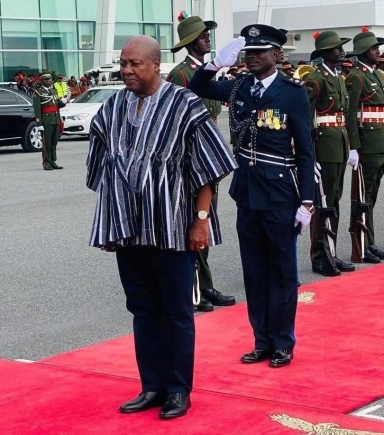
Tourism Minister condemns mockery of President Mahama’s traditional smock in Zambia
The Minister of Tourism, Arts and Culture, Abla Dzifa Gomashie, has criticised comments made by some Zambian social media users who referred to President John Dramani Mahama’s traditional fugu smock as a “blouse” during his ongoing state visit to Zambia.
President Mahama is in Zambia on a three-day official visit, where he is holding high-level engagements aimed at strengthening bilateral relations between Ghana and Zambia. However, public attention has shifted online from the diplomatic mission to the President’s choice of attire.
During the visit, President Mahama was seen wearing a fugu, a traditional smock strongly associated with the culture and heritage of northern Ghana. The attire, widely regarded as a symbol of identity, pride and cultural expression, received mixed reactions on social media.
While many praised the President for proudly showcasing Ghanaian culture on an international platform, some Zambian social media users described the outfit as a “blouse,” a comment that sparked widespread backlash from Ghanaians.
Reacting to the controversy in a Facebook post on Thursday, February 5, Minister Gomashie described the remarks as shocking and culturally insensitive.
She attributed the comments to the lingering effects of colonialism, questioning how Africans could mock the traditional attire of a fellow African leader.
The Minister recalled that prominent Ghanaian leaders, including the nation’s first President, Dr. Kwame Nkrumah, and former President Jerry John Rawlings, had proudly worn the smock as a symbol of national and cultural identity.
She further stated that the incident exposes a broader lack of appreciation for African culture and heritage, noting that ignorance often leads Africans to devalue their own traditions.
Gomashie stressed that Africa’s cultural emancipation remains a long journey that requires deliberate efforts in education and awareness.
She commended President Mahama for his consistent support for the creative arts and Ghanaian culture, encouraging him to continue promoting African identity on the global stage.
