
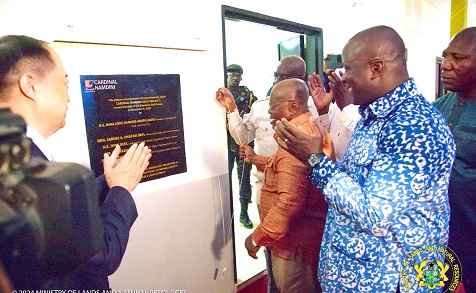
For centuries, gold has been at the heart of Ghana’s identity and economy.
It is no accident that the country was once called the “Gold Coast,” a name that reflects the abundance of the mineral resource which has long underpinned its economic and political history.
Today, Ghana stands tall as Africa’s leading gold producer and consistently ranks among the top ten producers worldwide.
Yet, for decades, this abundance of gold did not always work in our country’s favour; this was mostly due to lack of value addition and indigenous participation
Much of the gold left our shores in raw form, with little value retained at home, and our foreign exchange reserves remained weaker than expected for a nation so richly endowed.
Until recently, however, Ghana’s gold strategy was overwhelmingly export-oriented.
The domestic retention of gold reserves was minimal, and the nation’s foreign exchange reserves were largely held in currencies rather than its own natural resources.
This meant that Ghana, in spite of being a resource-rich country, remained vulnerable to external shocks such as swings in global oil and commodity prices, speculative attacks on the cedi and sudden reversals in capital flows.
It was against this backdrop that the Akufo-Addo administration sought to fundamentally rethink the relationship between Ghana’s natural resources and its economic sovereignty.
In June 2021, the Domestic Gold Purchase Programme (DGPP) was launched as part of broader reforms to stabilise the economy, strengthen the Ghanaian cedi and reduce dependence on external borrowing.
This article traces the history of the programme, situates it within the wider mining sector achievements of the Akufo-Addo administration, and considers the way forward for entrenching the initiative as a cornerstone of Ghana’s economic resilience.
Programme context
Successive governments have relied heavily on gold exports, which account for about 50 per cent of the country’s total export revenues, to generate foreign exchange earnings.
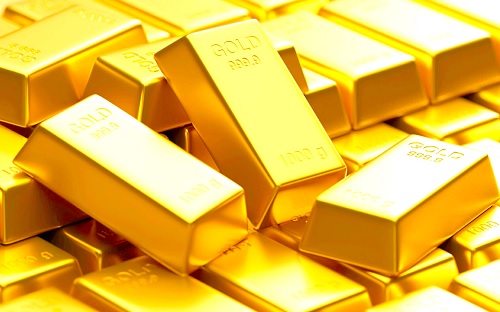
Some gold bars produced in Ghana
The turning point came under President Akufo-Addo’s administration. The Economic Management Team, under the able leadership of the then Vice-President, Dr Mahamudu Bawumia, was tasked to develop an appropriate programme of innovation in the gold industry.
Thus, recognising the need for a paradigm shift, the government, through the Bank of Ghana (BoG) and in collaboration with the Minerals Commission and the then Precious Minerals Marketing Company (PMMC), launched the DGPP.
The programme was designed as a strategic intervention to leverage Ghana’s gold resources for macroeconomic stability by enabling the central bank to purchase locally-mined gold directly and hold it as part of the country’s reserves.
It was also aimed to reduce the BoG’s reliance on the United States (US) dollar, which is often exposed to global market volatilities and shocks, compared to the relative stability of gold.
The initiative marked the first time in Ghana’s modern economic history that the state deliberately structured a mechanism to retain and monetise domestically produced gold for the benefit of the economy.
The DGPP functions through a straightforward, but highly effective mechanism. Under this framework, all large-scale mining companies are required to sell 20 per cent of their refined gold to the BoG.
Licensed small-scale miners, on the other hand, are obliged to offer the entirety of their gold output to the then Precious Minerals Marketing Company (PMMC), through which the government exercises its pre-emptory right to purchase the gold in accordance with the Minerals and Mining Act, 2006 (Act 703).
Where this right is exercised, the PMMC facilitates the subsequent sale of the gold to the BoG. In addition, rather than purchasing the gold in US dollars, the BoG makes all payments under the programme in Ghana cedis.
DGPP benefits
The arrangement delivers several immediate benefits to the Ghanaian economy. First, it conserves scarce foreign exchange by reducing demand for US dollars on the open market, thereby easing pressure on the cedi.
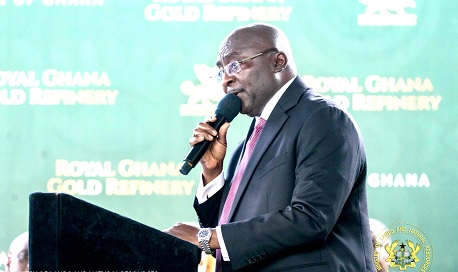
Dr Mahamudu Bawumia, former Vice-President, is credited with pushing for the Domestic Gold Purchase Programme
Second, it enables the BoG to accumulate gold reserves, which strengthens the country’s foreign exchange buffer and enhances macroeconomic stability.
Third, it allows Ghana to retain a greater share of its natural wealth, curbing the historical outflow of value that occurred when gold was exported almost entirely in its raw form.
The DGPP also provided the foundation for the Gold-for-Oil policy introduced in 2022. Through this policy, Ghana began using domestically purchased gold to pay for petroleum imports.
This led the country to conserve foreign exchange and tackle one of the largest drivers of dollar demand, which are fuel imports.
The result has been a dual benefit of reducing pressure on external reserves while simultaneously meeting critical domestic energy needs.
The plan was to extend this scheme to other heavy forex import products such as pharmaceuticals, thereby retaining lots of foreign exchange to support our national economy and currency.
Achievements of DGPP
Since its inception, the DGPP has delivered tangible results that are transforming Ghana’s economic landscape.
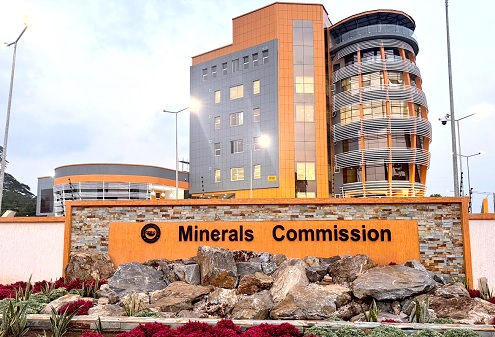
Minerals Commission office in Kumasi, Ashanti Region
The current First Deputy Governor of the Bank of Ghana, Dr Zakari Mumuni, recently restated this progress while speaking at the CONVERGE ’25 Conference in London, pointing to the remarkable growth in the country’s gold reserves.
When the programme was first introduced, the BoG held just about 8.74 tonnes of gold. As of July 2025, that figure has climbed to an impressive 34.40 tonnes.
This historic increase has strengthened the nation’s reserves and given the central bank greater room to protect the cedi in times of difficulty.
The benefits have gone beyond reserves. The programme has helped bring relative stability to the cedi during some of its most turbulent periods.
In November 2022, for instance, the currency had fallen to around GH¢13 to the dollar.
By November 2023, with the support of the gold-backed policies, it had recovered, trading at around GH¢11 to the dollar.
This improvement was also felt directly by ordinary Ghanaians at the fuel pumps, where petrol, which was selling above GH¢16 per litre in late 2022, dropped to about GH¢12 per litre by mid-2023, and diesel saw an even sharper decline from GH¢23 to GH¢12 per litre over the same period. And the impact of this novel policy on the current foreign exchange (forex) market and consequent petroleum pricing is still unfolding.
Importantly, the initiative created a more structured and transparent market for Ghana’s small-scale miners, who contribute a significant portion of the nation’s gold output.
The programme also encouraged compliance with regulations and helped to bring more of their activities into the formal economy.
Broader mining sector reforms
The DGPP did not emerge in isolation. It was part of a comprehensive vision, pursued by President Akufo-Addo, to reform and modernise Ghana’s mining sector.
A key aspect of this vision was to bring government regulation closer to mining communities and improve oversight.
To achieve this, the government expanded the presence of the Minerals Commission across the country. New district offices were constructed in Akim Oda and Bibiani, while existing offices in Wa, Bolgatanga, Prestea, Tarkwa and Dunkwa were renovated.
New regional offices were also constructed in Bolgatanga, Wa and Bole, while a modern eight-storey regional office complex and an ultra-modern laboratory was built in Kumasi.
Another major office complex, complete with a laboratory, is under construction in Tamale.
These investments have strengthened the institutional capacity to regulate the sector, monitor compliance and curb illegal mining.
President Akufo-Addo’s administration also ushered in a new era of mining expansion.
It commissioned the first large-scale mine in northern Ghana, the Cardinal Namdini Gold Mine, which was constructed in record time of less than two years and was the first greenfield mine in the country since 2013.
Another large-scale greenfield mine was commissioned in the Upper West Region by Azumah Resources, while the groundwork was laid for new ventures such as Newmont Ahafo North and Ghana’s first lithium mine by Atlantic Lithium.
These efforts signalled not just growth in production, but also the geographical diversification of mining activity beyond the traditional southern belt.
In 2022, as a result of these and other forward-looking policies, Ghana overtook South Africa and reclaimed her title as the leading producer of gold in Africa.
Equally, transformative was the government’s focus on value addition. A 400 kilogram (kg) capacity gold refinery was constructed and commissioned, ensuring that more of Ghana’s gold is refined domestically.
Plans were also advanced for a manganese refinery at Nsuta in the Western Region, valued at $450 million, to be funded by the parent company of Ghana Manganese Company.
These projects reflected the Akufo-Addo administration’s vision of translating mineral volumes into real wealth for Ghanaians.
The Akufo-Addo administration also strengthened local participation in mining by revising the Local Procurement List from 29 items in 2021 to 50 items reserved for Ghanaians.
The policy resulted in the retention of approximately $3 billion annually within the local economy, deepening linkages between mining and domestic industry.
Together, these achievements represent the bold and forward-looking legacy of the Akufo-Addo administration to advance the economic sovereignty of the country.
Way forward
The success of the Domestic Gold Purchase Programme has been remarkable, but like any pioneering initiative, it has not been without challenges.
One of the most pressing concerns is the persistence of illegal mining and gold smuggling, which continue to divert significant quantities of the mineral away from formal systems.
It is estimated that billions of dollars’ worth of gold leave Ghana annually through unregulated channels.
This undermines the supply available to the programme and deprives the state of the full benefits of its natural wealth.
Securing the long-term future of the DGPP requires building on its strong foundations and addressing the challenges with the same boldness that marked its inception.
In this regard, the Mahama administration’s introduction of the Ghana Gold Board (GoldBod) is a welcome and timely intervention, which, if effectively implemented, can further enhance the impact and sustainability of the programme.
The government must, therefore, intensify its campaign against illegal mining, while strengthening border controls and surveillance to curb smuggling.
At the same time, a complementary approach is needed to draw miners into the formal system by making legal participation more rewarding.
Fair and competitive pricing, technical assistance, and clear, predictable regulation can encourage compliance, ensuring that more of Ghana’s gold is captured into official reserves where it directly supports national development.
The country should never compromise, under any consideration whatsoever, the highest Environmental, Social, and Governance (ESG) standards in the mining sector, particularly ensuring that every ounce or kilogram of gold within the value chain is sustainably sourced in adherence to the highest standards of environmental protection.
Conclusion
The DGPP initiated by the Akufo-Addo administration under the auspices of the Economic Management Team led by Dr Mahamudu Bawumia, has transformed the narrative of Ghana’s gold from one of missed opportunities to one of national empowerment.
By stabilising the cedi, strengthening reserves and reducing dependence on foreign exchange, it has delivered real benefits to the economy and ordinary Ghanaians alike.
The task ahead is to protect these gains by confronting illegal mining, reducing smuggling, and sustainably expanding the mining industry, so that the benefits of gold reach every Ghanaian.
If sustained, the programme can serve as a model of how resource-rich nations can transform their endowment into long-term stability, resilience, and shared prosperity.
Fair, transparent and competitive trading anchored in integrity will be key to securing the long-term sustainability of the programme and ensuring that Ghana’s gold continues to drive national economic growth.
It is imperative for the current Mahama administration, through the GoldBod, to build on this extraordinary legacy of the Akufo-Addo administration for the collective good of the nation.
The writer is the immediate past Minister of Lands and Natural Resources, Member of Parliament for Damongo and the Ranking Member of Parliament’s Select Committee on Foreign Affairs and Regional Integration.
