
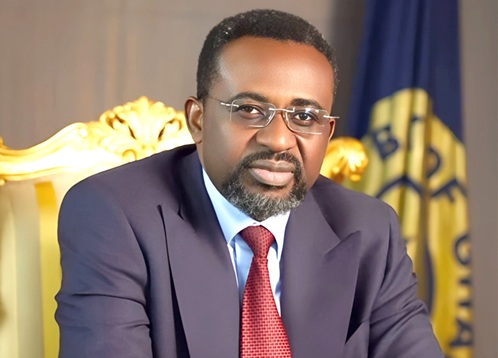
The Governor of the Bank of Ghana (BoG), Dr Johnson Pandit Asiama, has issued a clarion call for a strategic shift from consumption-driven remittances to investment-oriented diaspora capital flows.
He described the Ghanaian diaspora as a "strategic asset" central to the nation's economic transformation agenda.
Speaking at the maiden Diaspora Remittance Roundtable in the DMV area in the United States of America, spanning Washington DC, Maryland, and Virginia, last weekend, Dr Asiama revealed that remittance inflows to Ghana reached nearly $7.8 billion by the end of 2025, up from approximately $4.6 billion recorded in 2024.
"The Ghanaian diaspora is not peripheral to our economy – it is central to our external stability, our investment strategy and our economic transformation agenda," the Governor said.
"Our next phase is not just about remittances; it is about turning diaspora income into long-term investment capital for Ghana," Dr Asiama added.
Context
Present at the event were Ghana’s Deputy Ambassador to the United States, Jane Gasu Aheto; the Member of Parliament (MP) for Bolgatanga Central Constituency, Isaac Adongo; the Chief Executive of the Ghana Investment Promotion Centre (GIPC), Simon Madjie; Special Envoy for Reparations, Ekwow Spio-Garbrah, and executives of banks participating virtually from Ghana.
The Ghanaian community in the DMV area turned out in their numbers with visible enthusiasm, with representatives from across the region’s diverse associations gracing the event.
Leaders and members of the Ghanaian Association of Washington DC, Maryland, and Virginia, alongside professional bodies such as the Ghana Nurses Association, and various regional groups, including the Ewe Association, filled the Hilton Alexandria Mark Center.
Also present were executives from Ghanaian-owned small businesses, Fintech start-ups, and Ghanaian professionals who engaged actively in the discussions, signalling a united and purposeful diaspora ready to move beyond remittances into structured investment partnerships.
Contribution
Dr Asiama stated that at roughly six per cent of Gross Domestic Product (GDP), remittances now exceeded foreign direct investments (FDIs), underscoring their systemic importance to the nation's external sector.
The choice of the DMV area, he explained, was deliberate and strategic, as the region hosts one of the largest and most economically vibrant Ghanaian diaspora communities.
"You are entrepreneurs, financiers, technologists, healthcare professionals and policy influencers. You are not merely participants in the global economy; you are shapers of it," he told the gathering.
Policies
The Governor outlined several policy actions being pursued by the central bank, including the exploration of diaspora bonds and structured investment vehicles, promotion of foreign-currency-denominated investment products, and leveraging fintech partnerships to reduce remittance costs.
He cited proven global best practices from emerging market peers, stating that "Mexico shows how to scale diaspora funds, the Philippines shows how to change financial behaviour, and India shows how to mobilise large capital from remittances."
Dr Asiama emphasised that the BoG was committed to ensuring that when a Ghanaian in Washington decides to invest in Ghana – whether in government securities, small and medium enterprises (SMEs,) financial technology (fintech), real estate or infrastructure – "the pathway is seamless, credible and rewarding."
Economic recovery
In her welcome address, Ms Aheto explained that Ghana’s participation in the just-ended 2026 IMF/World Bank Spring Meetings in Washington, DC, had reinforced international confidence in the country’s economic recovery.
She disclosed that high-level engagements with development partners and private investors yielded strong indications of continued multilateral support, particularly in infrastructure financing, digital innovation and private sector development.
“These outcomes reflect a growing recognition that Ghana is steadily regaining its footing as a stable and attractive investment destination,” she said.
Ms Aheto further mentioned the progress being made under the Reset Agenda of President John Dramani Mahama, saying that inflationary pressures had begun to ease, the cedi had shown significant signs of stabilisation, and fiscal deficits were being brought under control through prudent expenditure management.
She emphasised that the government remained committed to creating an enabling environment for diaspora investment, adding that the Remit to Invest initiative offered an innovative pathway to channel remittances beyond consumption into productive investments.
“For Ghana, this aligns perfectly with our vision of harnessing diaspora resources as a strategic pillar of development finance,” Ms Aheto said.
The Deputy Head of Mission urged the diaspora to see themselves not merely as senders of money but as partners in national transformation.
“Let this occasion be remembered as one to transform remittances into engines of growth,” she declared.
“Let us continue to empower our diaspora not only to support Ghana but to invest in its future,” Ms Aheto stated.
