
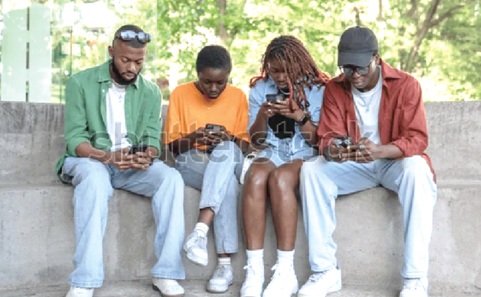
The rapid growth of social media has transformed the way students communicate, learn, and interact with the world.
In recent years, platforms such as WhatsApp, TikTok, Facebook, and Instagram have become an integral part of students' daily lives.
While these platforms provide access to information and educational opportunities, concerns continue to grow about their effect on academic performance, mental health, and social behaviour.
Many students spend a considerable portion of their day on social media.
What was once used primarily for communication has evolved into a platform for entertainment, business, education and social interaction.
Educational content creators have also emerged, producing videos and tutorials that help students understand difficult concepts in mathematics, science, and other subjects.
Despite these advantages, excessive use of social media has become a major concern among parents and educators.
Many students admit that they spend several hours scrolling through videos, reading posts, and engaging in online conversations that have little connection to their studies.
As a result, some struggle to complete assignments on time and maintain concentration during lectures.
Lecturers have observed that many students find it difficult to focus on classroom activities because of constant notifications from their mobile phones.
Some students continue to check messages and social media updates even during lectures, reducing their ability to absorb important information.
This habit, according to educators, may contribute to declining academic performance.
The influence of social media extends beyond academics. Mental health professionals have raised concerns about the psychological effects of prolonged social media use.
They explain that constant exposure to carefully edited images and lifestyles may lead some students to compare themselves with others, resulting in low self-esteem, anxiety and stress.
Cyberbullying has also emerged as a growing challenge. Some students have become victims of online harassment, insults, and intimidation through social media platforms. Such experiences can negatively affect confidence, emotional well-being, and academic performance.
Another issue is the spread of false information.
With information circulating rapidly online, students may encounter inaccurate news, misleading claims, and fabricated stories.
Experts
Experts warn that the inability to distinguish between credible and unreliable sources can affect students' understanding of important national and global issues.
Parents have expressed mixed views about social media.
While some acknowledge its educational value, others worry that excessive use is reducing face-to-face interaction within families.
They argue that many young people spend more time engaging with screens than communicating with relatives and friends in person.
To address these challenges, education stakeholders are calling for responsible social media use. Schools and universities are being encouraged to incorporate digital literacy programmes into their curricula to help students evaluate online information critically.
Students are also being advised to develop effective time-management skills and limit unnecessary screen time.
Technology experts believe social media will continue to play a significant role in education and communication.
However, they stress that its benefits can only be fully realised when students use it responsibly and maintain a balance between online activities and academic responsibilities.
The responsibility lies with students, parents, educators, and technology companies to ensure that these platforms contribute positively to learning and personal development rather than becoming obstacles to academic success
The writer is a student journalist, (UNIMAC)
E-mail: feshun064@ gmail.com
