
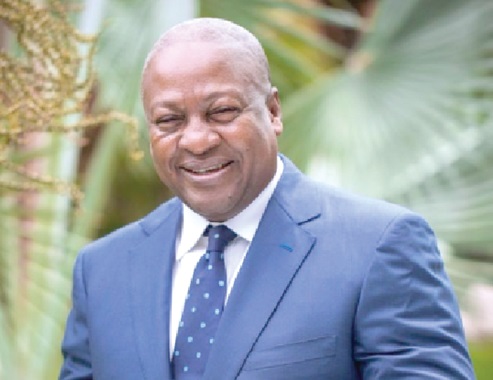
When President John Dramani Mahama spoke on the sidelines of the 2026 World Economic Forum (WEF) in Davos, Switzerland, the significance of the moment lay less in the venue than in the message.
Davos has long symbolised the commanding heights of global capitalism—an arena where Africa is routinely discussed, analysed, and prescribed for, but rarely listened to as an agenda-setter.
Mahama’s intervention disrupted that familiar pattern. What emerged was not a plea for sympathy, aid or inclusion, but a declaration of intent: Africa, beginning from Accra, is seeking to re-engineer the terms on which it engages the world.
The Accra Reset Initiative, launched in late 2025 and now formally internationalised through a Presidential Council of sitting global leaders, represents Ghana’s most ambitious attempt in decades to convert moral authority into institutional power.
From Accra to the World: Why This Moment Matters
Ghana’s history has always carried a burden larger than its borders. From Kwame Nkrumah’s Pan-African vision to its role as host of the African Continental Free Trade Area (AfCFTA) Secretariat, Ghana has often served as a laboratory for African possibility.
The Accra Reset situates itself firmly within that tradition.
Announced at Davos, the initiative was deliberately placed at the heart of global power—not as an appeal to benevolence, but as a strategic insertion into the rule-making space of international development, finance and health governance.
In doing so, President Mahama signalled that Africa’s challenge is no longer simply marginalisation, but misalignment: global systems continue to operate in ways fundamentally incompatible with African sovereignty and development priorities.
The Reset is, therefore, not cosmetic reform. It is an attempt to renegotiate the underlying logic of cooperation between the Global South and Global North.
AU Chairmanship and Ghana’s Quiet Re-Emergence as a Convening Power
President Mahama’s impending chairmanship of the African Union (AU) comes at an unusually decisive moment. In the past, the AU chairmanship was often symbolic, with leaders reacting to events shaped elsewhere.
Today, however, he assumes the role as the global order itself is under strain—marked by intensifying geopolitical rivalry, countries pulling supply chains back home, rising health nationalism, and the steady breakdown of the cooperative system that governed international relations after World War II.
Within this uncertainty lies opportunity. Rather than projecting dominance, Ghana—under Mahama—appears to be reclaiming a more historically consistent role: convener, bridge-builder and coalition architect.
The composition of the Accra Reset Presidential Council is telling.
It brings together African heavyweights—South Africa, Nigeria, Kenya, Egypt, and the Democratic Republic of Congo (DRC)—alongside influential Global South partners such as Brazil, India, Indonesia, and Barbados.
This is not accidental diplomacy. It reflects a calculated understanding that Africa’s leverage will come not from isolation, but from strategic alignment within a multipolar world.
Reparations Beyond Rhetoric: From Moral Claim to Structural Redesign
Mahama’s long-standing involvement in the reparations discourse has often been interpreted narrowly—as historical redress for slavery and colonialism. The Accra Reset advances this conversation decisively.
Here, reparations are no longer framed as symbolic apology or monetary compensation, but as a systemic correction. Aid dependency, fragile health systems, and externally dictated development models are presented as the living legacies of historical extraction.
By insisting on health sovereignty, domestic manufacturing capacity, and co-designed financing frameworks, the Reset effectively argues that true reparative justice lies in dismantling dependency-producing structures.
This approach aligns Ghana with the Caribbean Community and Common Market’s (CARICOM) reparatory justice agenda while extending it into practical policy architecture.
Health as Strategy, Not Sentiment
Choosing health as the starting point of the Accra Reset is a smart strategic decision.
The COVID-19 pandemic exposed how vulnerable Africa is within the global health system—shut out by vaccine nationalism, constrained by intellectual property rules, and pushed to the back of global supply chains.
Health systems sit at the centre of modern development.
They link industrial policy, technology transfer, skills training, and new ways of financing growth.
If Africa can successfully redesign how health cooperation works—covering production, purchasing, regulation and financing—it creates a working model that can be applied to other key sectors needed for economic transformation.
Rather than returning to charity-based solutions, the Accra Reset positions health as a proof of concept—a sector through which Africa can demonstrate the viability of sovereignty-centred development.
Prosperity Spheres and the Legacy of Pan-Africanism
The idea of creating “prosperity spheres across regional platforms” speaks directly to Ghana’s Pan-African tradition.
It echoes Kwame Nkrumah’s belief that political independence means little without economic integration; Gamal Abdel Nasser’s push for development free from external domination; Julius Nyerere’s emphasis on cooperation over competition; and Patrice Lumumba’s warning that sovereignty without control over resources is an illusion.
What sets the Accra Reset apart from earlier Pan-African efforts is its practicality.
It does not call for an immediate political union. Instead, it focuses on coordinated economic systems—shared investment planning, regional infrastructure, job creation, and integrated value chains.
This is Pan-Africanism expressed not as ideology, but as workable institutions.
The Guardian Circle: Experience as Strategic Strength
The Circle of Guardians—led by former Nigerian President Olusegun Obasanjo and including Ellen Johnson Sirleaf, Joyce Banda, John Kufuor, Jakaya Kikwete, and Ameenah Gurib-Fakim—adds more than prestige to the Accra Reset.
It brings decades of experience dealing with donors, global financial institutions and major power centres.
Their presence gives the initiative historical memory and negotiating strength.
Obasanjo’s warning that “the future will not be given… it will be negotiated” underscores a hard truth: Africa’s next stage of progress will not come through appeals to goodwill alone, but through preparation, unity, and clear strategy.
Unity Delayed, Integration Underway
Is Africa finally close to the unity dreamed of by its founding leaders? Politically, the answer is still no.
But economically and institutionally, the Accra Reset suggests Africa may be entering a new phase—one where cooperation and integration come first, laying the groundwork for deeper unity later.
Seen this way, Mahama’s intervention at Davos is not an endpoint.
It is a turning point—an attempt by Ghana to once again translate Africa’s long-held aspirations into concrete systems and institutions; a journey that demands intellectual seriousness, disciplined diplomacy, and consistent policy direction.
History has once again placed Ghana at a choice between symbolism and substance.
If it succeeds, the words spoken at Davos may one day be remembered not as routine commentary, but as the moment Africa began, deliberately and collectively, to reset its place in the world.
