
Africa’s tourism numbers tell a compelling story.
According to the UN Tourism World Tourism Barometer, 2025 marked a return to pre-pandemic growth patterns, with international tourism expanding by about four per cent globally despite inflationary pressures and geopolitical uncertainty.
Africa recorded the strongest regional performance worldwide, welcoming an estimated 81 million international tourists – an eight per cent year-on-year increase compared to 2024.
These results outpaced Europe, the Americas and Asia-Pacific, reinforcing Africa’s position as the world’s fastest-growing tourism region.
It is against this backdrop that Ghana’s newly announced Free Visa for Africans policy, scheduled to take effect from Africa Day on May 25, 2026, must be examined.
Beyond the headlines, the policy raises important questions about mobility, security, integration and Africa’s long-term development vision.
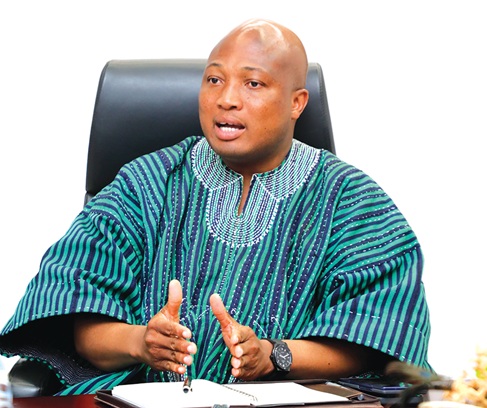
At its core, Ghana’s announcement is not about opening borders without control. As clarified by the Minister of Foreign Affairs, Samuel Okudjeto Ablakwa, in a Facebook post on April 3, 2026, the new policy removes visa fees for Africans, but it does not remove the requirement to apply for a visa.
African travellers will still be required to submit applications and undergo screening and vetting procedures. What changes is the cost, not the controls.
The policy is anchored in a newly introduced e-Visa system that will apply to all applicants — African and non-African alike.
According to the Minister, the platform is integrated with Ghana’s API-PNR system and linked to international security databases, ensuring that border management remains intelligence-led and risk-based.
Addressing questions about why a similar policy was not implemented earlier, the Minister explained that although former President Nana Akufo-Addo announced a Free Visa for Africans policy in 2024, it could not be operationalised at the time because the necessary technological infrastructure and security safeguards were not yet in place.
“For clarity,” the Minister noted, “that announcement did not take effect because the mechanisms and security frameworks had not been completed.
As President John Mahama indicated yesterday, Ghana is now ready to launch an e-Visa platform for all applicants globally, alongside a Free Visa for Africans policy from Africa Day — May 25, 2026 — fully anchored on appropriate security and technological systems.”
In simple terms, free does not mean unchecked. This distinction is crucial, particularly at a time when visa liberalisation is often mischaracterised as automatic entry.
What Ghana is doing is deliberately separating cost barriers from security safeguards, aligning its border management with contemporary global best practice while advancing the broader agenda of African mobility and integration.
How Ghana compares with other African models
Ghana is not entering this space alone. Countries such as Seychelles, Rwanda and Benin have already adopted liberal entry regimes for Africans.
Seychelles operates a near-open border policy, Rwanda allows visa-on-arrival for all Africans, and Benin has progressively eased entry requirements as part of its tourism repositioning.
What distinguishes Ghana’s approach is sequencing. Rather than liberalising first and building systems later, Ghana is launching free visas alongside a digital vetting architecture.
The open question is whether this model will eventually evolve into full visa-free access or remain a structured, application-based system over the long term.
Existing visa waivers
An important but often overlooked dimension is how the new policy interacts with Ghana’s existing visa waiver arrangements. What changes and what does not.
Ghana already has bilateral visa waiver agreements on both official and ordinary passports with several African countries, including South Africa, Kenya, Zambia, Zimbabwe, Tanzania and Uganda.
In addition, Ghana operates a multilateral free movement regime with all ECOWAS member states.
There is no indication that these arrangements will be altered. Instead, the Free Visa for Africans policy appears designed to close existing gaps — extending fee-free access to Africans from countries that do not already benefit from waivers.
The policy is, therefore, additive rather than disruptive.
Agenda 2063, the bigger continental picture
This evolving policy conversation fits squarely within the ambitions of the African Union Agenda 2063, which envisions an integrated, mobile and economically connected continent.
Free movement of people is not simply a political ideal; it is a practical requirement for tourism, trade, investment and cultural exchange.
Ghana’s approach reflects the tension between aspiration and implementation. Liberalisation without systems risks insecurity. Systems without openness risk stagnation.
The country is attempting to strike a careful balance between the two.
Tourism, value capture, execution risks
From a tourism standpoint, the implications are significant. Visa fees, though often modest, can be powerful deterrents to intra-African travel, particularly for leisure, business events and cultural exchanges. Removing this cost could stimulate regional conferences, festivals and short-stay travel.
However, the real test lies in execution — processing times, platform reliability, communication clarity and inter-agency coordination. Policy intent must be matched by operational efficiency.
Even as some have raised concerns about the security implications of the initiative, the Foreign Minister insists those issues have been addressed.
“Adequate investments have been made by the Ministries of Foreign Affairs, the Interior and Transport to ensure a robust and technologically advanced architecture is in place,” he wrote.
A policy to watch, not a conversation to close
Africa’s tourism growth story is strong, but growth alone is not enough.
The continent’s ability to capture value from rising global tourism demand depends on accessibility, trust and institutional readiness.
Ghana’s Free Visa for Africans policy is a meaningful step forward — not a final destination.
It is a policy that deserves scrutiny, refinement and learning, both within Ghana and across the continent.
Its success will ultimately be judged not by the announcement, but by whether it truly makes African travel easier, safer and more connected than before.
