
In the Book of Genesis, humans were placed in the garden to “work it and take care of it.” This was the first job description ever given to humanity.
Environmental consciousness is simply the modern way of fulfilling that ancient call. It requires us to slow down, think deeply about our choices, and exercise the self-control necessary to live sustainably.
As a people, we often speak about stewardship—the responsibility God gave us to tend to His creation. But stewardship isn't just a "project" we do once a year on Earth Day; it is a spiritual discipline.
To truly honour the Creator, we must move toward a holistic environmental consciousness—seeing the world not as a resource to be used, but as a sacred gift to be protected. This shift requires one thing above all else: Self-discipline.
1. The Heart of the Matter is Self/Spiritual Discipline
Self-discipline is one of the fruits of the Spirit. We use it to guard our tongues and our tempers, but we must also use it to guard our consumption.
Holistic environmentalism means understanding that our smallest private actions have a global public impact. When we exercise the discipline to "say no" to excess, we are practicing a form of worship to our Creator. To safeguard our environment, we need to be:
Discipline of Consumption by resisting the urge to buy things we don't need.
Discipline of Waste by taking the extra moment to sort recycling or compost rather than choosing the "easy" way out, and
Discipline of Gratitude by moving from a mindset of "more" to a mindset of "enough."
2. Connecting the Soul to the Soil
A "holistic" approach means recognizing that the environment isn't "out there"—it’s right here. Our health, our neighbor's health, and the earth's health are tied together.
For our Bodies: Choosing local, whole foods reduces the carbon footprint of transportation and honors the body as a temple.
For our Neighbors: Pollution and climate change often hit the most vulnerable communities first. To love our neighbor is to protect the climate they live in.
For the Future: Self-discipline today ensures that the next generation inherits a world that can still provide "daily bread."
3. Practical Steps to Take at our Homes and Workplaces
How do we turn this consciousness into action? It begins with the “small gates” embedded in our daily routines. We can start by adopting simple, practical habits that help safeguard our environment:
Choose ceramic mugs or encourage a “bring your own bottle” culture instead of relying on single-use plastic plates and cups.
Appoint a “Steward of Light” in our homes, offices, and churches to monitor energy use, preventing lights and air conditioners from being left on in empty rooms and halls.
Opt for products with minimal packaging and fair‑trade origins, rather than buying the cheapest items that come heavily wrapped in plastic.
Plant community gardens or cultivate native species that support bees and birds, instead of focusing solely on grass lawns or purely decorative flowers.
The Ten Environmental Commandments
1. REDUCE WASTE: Avoid single‑use plastics.
2. RECYCLE DILIGENTLY: Sort your waste with care.
3. CONSERVE ENERGY: Turn off lights and unplug devices when not in use.
4. SAVE WATER: Be mindful of every drop you use.
5. PROTECT WATER BODIES: Treat rivers, lakes, and seas with respect.
6. CHOOSE SUSTAINABLY: Opt for environmentally friendly products and practices.
7. EAT LOCAL & SEASONAL: Consume what you grow and support local produce.
8. NURTURE PLANT LIFE: Plant trees and cultivate gardens.
9. EDUCATE OTHERS: Share knowledge and inspire change.
10. ADVOCATE & PRAY: Seek the well‑being of all creation.
By faithfully observing these environmental commandments, our nation and communities will become safe havens for humanity.
Conclusion
Let us ensure that our hands are as gentle on the Earth as the Creator’s hands are on us. In doing so, we can leave a healthy environment for generations yet unborn.
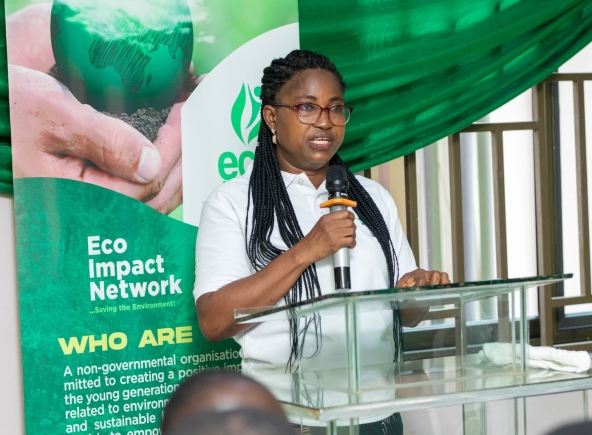
About Eco Impact Network
Eco Impact Network is a Non-Governmental Organisation committed to positively influencing the younger generation through environmental consciousness and sustainable living practices for a healthier planet.
The author is Mrs Gifty Ofori-Yeboah, Executive Director, Eco Impact Network)
