
In the bustling heart of Accra Mall, a pale stranger from Russia approached ordinary women, including students, wives, market traders, and professionals.
“Hi, I’m from Russia. You’re beautiful.” A smile, a quick chat, a casual invitation. And hundreds followed. Not weeks of courtship. Not family introductions. Same day. Same hour. Into his apartment. Into his bed. Into his hidden camera.
What happened next is heartbreaking.
Vyacheslav Trahov, known online as Yaytseslav, wasn’t just a tourist chasing thrills. He was a predator with a plan: smart glasses that looked innocent but recorded everything, conversations, and intimacies. He monetised the footage on paid channels. The clips went viral. Ghana is burning with rage, and rightly so. The government has launched investigations through the Cyber Security Authority.
But in the frenzy to chase the Russian villain, something uncomfortable was whispered in homes, on tro-tros, and in quiet WhatsApp groups: Our own daughters opened the door.
This scandal wasn’t just about one slick foreigner with a camera. It was a mirror. A brutal, unflinching mirror held up to the soul of modern Ghanaian womanhood. And what it revealed should make every parent, every chief, every pastor, every imam and every leader weep.
Ghanaian women have always been the backbone of our nation—resilient market queens, brilliant professionals, nurturing mothers. But something has gone terribly wrong in how we are raising them.
First, the broni myth. For too many young women today, a white man is not just a person, he is a ticket. A status symbol. A promise of escape from the grind. “Obroni pɛtɛ” we call it in the streets: the white man’s special sauce.
Social media has supercharged this poison. TikTok reels of Ghanaian girls living lavish lives abroad. Instagram fantasies of foreign boyfriends sending dollars. The result? A generation that sees local men as “broke” and foreigners as gods. Even when the “god” is a random Russian with broken English and a hotel room.
Second, the collapse of boundaries. Our grandmothers would slap a girl for following a stranger. Today? “My body, my choice.” Consent is shouted from rooftops, but wisdom is nowhere to be found. Impulse rules. Discernment is “old-fashioned.” Many of the women in those videos weren’t dragged—they went willingly. Eagerly. For what? A thrill? A few compliments? The fantasy of being “chosen”?
Third, the materialism epidemic. Ghana’s economy is tough. Unemployment bites. Hustle culture glorifies quick money over hard work. When a young woman believes her value lies in what she can get from a man—any man with cash or colour—she stops building herself. She becomes prey. The Russian didn’t create this hunger. He simply fed it.
Fourth, the fatherless void. Where are the men? Too many daughters grow up without fathers who teach them their worth. Mothers, stretched thin, sometimes model the same chase for provision. Churches preach prosperity but skip character. Schools teach STEM but not self-respect.
The village that once raised the child has been replaced by algorithms that reward degeneracy.
This is not victim-blaming. The Russian is a criminal—full stop. Non-consensual filming is evil. But pretending the women were helpless innocents does them no favours. It keeps them trapped. True empowerment begins with truth.
The Ghana We Must Build: Moulding Daughters of Steel and Virtue.
Ghana does not need more outrage. We need a revolution in how we raise our girls.
Let’s start in the home—the first and most powerful school. Fathers must reclaim our daughters. Let’s teach them that their value is not in their beauty or what they can offer a man, but in their mind, their character, their God-given dignity.
Walk them through the red flags: the man who rushes you, the stranger who flatters too quick, the “provider” who demands everything on day one. Mothers, model it. Show them that a real queen builds her own table before inviting guests to sit.
Rebuild our cultural fortress.
Bring back the rites. The proverbs. The aunties who taught modesty not as shame, but as power. “A woman who respects herself commands the world.” Let our chiefs and queen mothers lead campaigns, not just against “foreign predators,” but against the internal rot of cheap validation. Traditional values weren’t perfect, but they protected our women from this exact humiliation.
Reform education with urgency.
Every school from basic to university must have mandatory modules on;
1. Financial independence (so no woman ever follows a man for bread).
2. Digital dangers (cameras are everywhere now).
3. Relationship wisdom (delay gratification, vet ruthlessly, marry intentionally).
4. Self-worth rooted in faith, family, and nation—not likes and foreign attention.
Churches and mosques, stop the selective preaching. Call out the “slay queens” chasing bronis and local men with cash while ignoring the single mothers left behind. Youth groups should produce women who fear God more than they fear missing out.
We also need to create skills training, mentorship from successful Ghanaian business women (not slay queens), micro finance that builds empires and not dependency.
When a young woman can stand tall on her own cedis, the Russian with the camera loses his power. Poverty makes bad choices easier. Prosperity builds better judgment.
Men must rise too.
High-value Ghanaian men—ambitious, disciplined, protective—must stop simping and start leading. Marry well. Father deliberately. Call out nonsense in your circles. The strongest societies have strong men and virtuous women working together. We cannot fix our daughters while our sons are lost in porn, laziness, and entitlement.
Media and culture as weapons of restoration. Flood TikTok, YouTube, and radio with stories of Ghanaian women who chose wisely. The engineer who built her career. The farmer’s daughter who became a CEO. The wife who built a dynasty. Shame the shameless—not with cruelty, but with truth. Let the next viral sensation be a young Ghanaian woman rejecting a fast life for a legacy.
As a father of four daughters, this scandal is painful. But pain is a teacher. Ghana has survived worse, from slavery, colonialism to coups and bad democratic governments. We can survive this moral drift.
Imagine a Ghana where our daughters see a stranger and think not “opportunity,” but “danger.” Where they carry themselves with the quiet power of our ancestors—the Dagbon Princesses, Asante queens, the Ga market mothers, the Ewe wisdom keepers. Where “responsible woman” is not an insult, but the highest praise.
The Russian has left. But the mirror remains. Will we smash it and pretend we didn’t see? Or will we look deeply, and build something unbreakable?
The choice is ours. For our mothers. For our sisters. For the Ghana of tomorrow.
Let us choose wisely. For the strong Ghanaian women who already embody this, thank you. You are the hope. The rest of us must catch up.
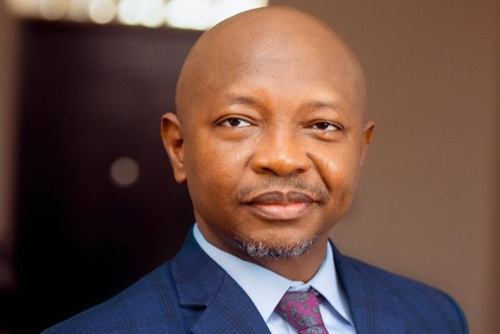
The author is a former Member of Parliament for Kumbungu and ex-Chief Executive of the National Youth Authority, Abdulai Mohammed Mubarak alias Ras Mubarak.
