


Regulators and industry unite as Ghana sets guardrails for Virtual Asset future
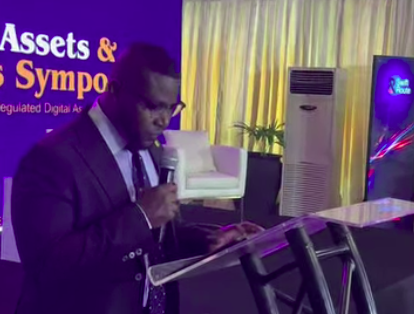
Ghana’s financial regulators and digital asset industry leaders have signalled a coordinated push to build a regulated, innovation-driven virtual asset ecosystem, as the inaugural Ghana Virtual Assets and Financial Services Symposium opened in Accra.
Held under the theme “From Trust to Transparency: Building Ghana's Regulated Digital Asset Future", the symposium brought together the Bank of Ghana, the Securities and Exchange Commission, the Financial Intelligence Centre and private sector actors following the passage of the Virtual Asset Service Providers Act, 2025.
Speaking at the event, the Head of Fintech and Innovation at the Bank of Ghana, Mr Owuraku Asare, described the moment as the culmination of years of engagement between regulators and industry stakeholders.
Recalling earlier scepticism about the country’s regulatory intentions, he said, “I quite remember in 2024 when the governor, no, I think last year when the governor visited, was that the spring meetings in Washington, IMF meetings, he made it very clear, and was a very bold statement that regulates virtual assets.”
He acknowledged that some had doubted the commitment at the time but said the current framework demonstrates that the effort has materialised. “I think it's happened because of you, and I think we all deserve a round of applause,” he added, crediting collaboration between the central bank, the Securities and Exchange Commission and industry actors.
Mr Asare emphasised that although the Act has been passed and assented to, further directives and regulations will be developed to guide implementation.
He was unequivocal that the move to regulate virtual assets does not signal a replacement of Ghana’s sovereign currency.
“This is not to replace the Ghana cedis,” he said, stressing that innovation would instead address inefficiencies in the current fiat system, particularly in cross-border transactions. While noting the openness to stablecoins, he added that Ghana has the opportunity to develop cedi-backed stablecoins to prevent adverse impacts on the domestic currency.
For the central bank, he reiterated, the priorities remain financial stability and consumer protection. “For the central bank, our key objective is financial stability and consumer protection.”
On the industry side, the Vice President of the Chamber of Digital Assets Ghana and Blockchain Innovation, Del Titus Bawuah, said the organisation was formed to ensure that the virtual asset ecosystem had a structured voice in policy conversations.
He explained that the aim was to bridge communication between regulators and innovators. The Chamber, he said, created an environment where regulators could understand the challenges faced by builders in the ecosystem, while industry participants could appreciate regulatory expectations.
“We are now in a situation where, obviously, now our framework has been passed. You know, we have a bill in place in Ghana,” he said, describing the symposium as part of efforts to sustain progressive dialogue and clarity on both sides.
Mr Bawuah stressed the importance of unity between institutions and innovators, arguing that Ghana could position itself as a regional leader in virtual asset regulation and development if collaboration is maintained.
He told participants that the event would feature speakers “not just from a point of title, but actually from a point of knowledge context” and encouraged continued engagement across the ecosystem.
Delivering an address, the Acting Deputy Director-General in charge of Finance at the Securities and Exchange Commission, Mr Mensah Thompson, framed the development within Ghana’s improving macroeconomic conditions.
He said inflation has declined, interest rates are easing and overall financial conditions have strengthened, creating a more supportive environment for capital market development.
Against that backdrop, he described the Virtual Asset Service Providers Act as a major milestone. “Regulatory clarity is not an obstacle to growth. It is the foundation of sustainable growth,” he stated.
However, he cautioned that passing legislation is only the first step. “The law provides authority. But it is the frameworks, guidelines, supervisory tools, and enforcement mechanisms that make regulation real and effective.”
Mr Thompson disclosed that the Commission is finalising a Regulatory Sandbox framework and other instruments to operationalise the Act, outlining licensing standards, governance requirements, operational controls and reporting obligations.
He underscored the importance of financial integrity and international compliance, highlighting collaboration with the Bank of Ghana and the Financial Intelligence Centre to enforce anti-money laundering and counter-terrorism financing standards, including implementation of the FATF Travel Rule.
“Ghana will not become a weak link in the global financial architecture,” he declared. “Innovation must not create avenues for illicit finance. It must operate within a framework of transparency and accountability.”
He also announced the joint rollout of a National Virtual Asset Literacy Programme to strengthen knowledge across the public, market participants and regulators. “An informed market is a resilient market. An informed investor is a protected investor,” he said.