
Free primary healthcare to cost GH¢1.2bn yearly; NHIS coverage hits 66% — Health Minister
The Minister of Health, Mr Kwabena Mintah Akandoh, has said Ghana will require about GH¢1.2 billion annually to run the government’s free primary healthcare programme, ahead of its official launch.
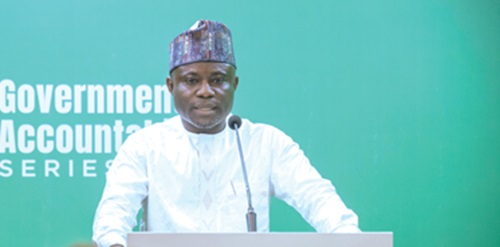
Mr Akandoh gave the figure on April 13, 2026, at the Government Accountability Series press briefing in Accra, when he responded to questions on the cost of the programme.
“We need not less than 1.2 billion Ghana cedis a year to be able to run this,” he said. “It is not an ad hoc programme or project. We have thought through it, engaged widely and done our projections.”
He also said enrolment under the National Health Insurance Scheme had increased from about 57 per cent to 66 per cent within a year.
The 2026 national budget allocated GH¢1.5 billion to support the rollout of the programme across the country.
The health sector received GH¢34 billion in total, including GH¢11 billion for the National Health Insurance Scheme.
An additional GH¢2.3 billion was earmarked for the Ghana Medical Trust Fund, also known as MahamaCare, while GH¢600 million was set aside for the construction of three new regional hospitals in the Savannah, Oti and Western North regions.
President John Dramani Mahama is scheduled to launch the programme on April 15, 2026.
The initiative will cover treatment for conditions such as malaria, diarrhoea and respiratory infections. It will also include preventive and promotive services delivered by community health volunteers in homes and communities.
Mr Akandoh said the programme is separate from the National Health Insurance Scheme. He explained that patients referred from primary healthcare facilities to regional or teaching hospitals would not receive free treatment at those higher-level facilities under the new arrangement.
“It is about time we get to know these boundaries clearly,” he said. “Nobody is ready to give any false hope.”
He urged the public to maintain active membership of the National Health Insurance Scheme to access care beyond the primary level.
Mr Akandoh also said he had inspected a warehouse containing about 24,000 pieces of essential medical equipment to be distributed to health facilities ahead of the rollout. He added that underserved areas would be given priority.
