
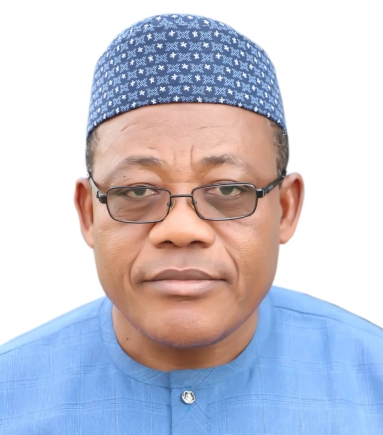
When John Dramani Mahama, President of the Republic of Ghana, stood before the international community and declared that slavery is criminal he did more than make a political statement. He articulated a truth that the modern world has long struggled to confront with honesty and consequence. Or perhaps, has tried to evade – albeit in vain. For centuries, slavery has been framed as a regrettable episode in history, a tragic but distant past. Yet such framing obscures a more uncomfortable reality: slavery was not simply an event; it was a systematic, organised, and prolonged crime against humanity, the effects of which continue to shape global inequalities today.
Mahama’s intervention comes at a time when the global order is being reassessed – when questions of justice, historical accountability, and structural inequality are no longer confined to academic debate but are increasingly central to international politics. His assertion strips away euphemism and moral ambiguity. Slavery was criminal. Not metaphorically. Not symbolically. But in its essence, structure, and consequences.
The Architecture of Human Exploitation
The transatlantic slave trade, which spanned roughly from the 15th to the 19th centuries, was one of the most extensive systems of human exploitation ever constructed. European powers – including Britain, Portugal, Spain, France, and the Netherlands – did not stumble into slavery; they engineered it. It was embedded in their state policy, financed by commercial capital, and justified through racial ideology.
Between 12 and 15 million Africans were forcibly transported across the Atlantic. This figure does not account for the millions who died during raids, forced marches, or the infamous Middle Passage. Slavery was not chaotic; it was meticulously organised. Ships were designed to maximise human cargo. Markets were structured to price human beings. Laws were enacted to define Africans as property. This was not an accident of history. It was a deliberate system of extraction – of labour, of life, and of humanity.
The Black Man’s Misery: Dehumanisation as System
To understand slavery is to confront its brutality – not as isolated incidents, but as systemic practice. The Middle Passage alone stands as one of the most horrific chapters in human history. Enslaved Africans were packed into ships under conditions so inhumane that mortality rates were staggering. Those who survived arrived in the Americas only to enter a lifetime of forced labour, violence, and psychological degradation.
Families were torn apart with calculated indifference. Identities were erased. Languages were suppressed. Religion and culture were systematically dismantled. Enslaved people were denied not only freedom but personhood – legally classified as property, stripped of rights, and subjected to absolute control.
Slavery was not only about labour; it was about domination. It sought to reduce human beings to instruments – tools for economic gain. In doing so, it inflicted trauma that extended far beyond the individuals enslaved, embedding itself across generations.
Africa’s Interrupted Trajectory
Before the onset of the transatlantic slave trade, Africa was home to sophisticated civilisations – Mali, Songhai, Benin, and others – characterised by complex political systems, trade networks, and cultural achievements. The slave trade disrupted this trajectory profoundly. The extraction of millions of young, able-bodied individuals weakened societies demographically and economically. Communities were destabilised. Warfare intensified as groups were drawn into the capture and sale of human beings. Indigenous systems of governance and development were distorted by external demand.
The narrative that Africa was inherently underdeveloped ignores this history. Africa was not simply left behind; it was actively derailed. The consequences of this disruption continue to reverberate, shaping patterns of inequality, governance challenges, and economic constraints across the continent.
The Hidden Foundation of Western Wealth
It is impossible to separate the rise of the modern West from the exploitation of enslaved African labour. The plantation economies of the Americas – producing cotton, sugar, tobacco, and other commodities – were built on slavery. These commodities fed into industrial systems in Europe, particularly in the United Kingdom, where textile manufacturing became a cornerstone of the Industrial Revolution.
The wealth generated from slavery did not remain confined to plantations. It financed banks, built ports, and fuelled industrial expansion. It contributed directly to the economic rise of the United States and European powers. The infrastructure of modern capitalism bears the imprint of enslaved labour.
To acknowledge this is not to diminish the achievements of these nations, but to recognise that their development was not morally neutral. It was built, in significant part, on the uncompensated labour of millions – millions of enslaved peoples.
Ghana and the Geography of Human Export
Ghana occupies a central place in this history. Sites such as Cape Coast Castle and Elmina Castle stand as stark reminders of the transatlantic trade. These were not just forts; they were holding centres where human beings were confined before being shipped across the Atlantic – often never to return. Ghana was not alone. Other key ports included Gorée Island in Senegal, Badagry in Nigeria, and Ouidah in Benin. These locations formed a network – a geography of extraction that linked African societies to global markets in human labour.
Today, these sites are places of memory and reflection. But they also serve as evidence – accusingly – of the scale and organisation of the system that once operated through them.
The Reparations Movement: From Margins to Mainstream
For decades, calls for reparations were dismissed as unrealistic or symbolic. That is no longer the case. Across the Caribbean, Africa, and the diaspora, the reparations movement has gained momentum. It serves well to recall that Chief M.K.O. Abiola, presumed winner of the 1993 presidential election in Nigeria, long ago proposed the idea of leading a reparations movement.
Chief Abiola chaired the Organisation of African Unity (OAU) Group of Eminent Persons on reparations established in 1992, with mandate to actively pursue reparations claims. Under his leadership, the first Pan-African Conference on Reparations was held in Abuja in April 1993, formally launching the movement, and declaring an Abuja Proclamation. President Mahama anchoring the reparations call on the floor of the UN goes to underscore the fact that not only has the time come for those who perpetrated the crime of slavery against Africans to pay reparations; but that the decibel for the call will only increase – in quantum and intensity. For instance, organisations such as CARICOM have developed formal frameworks for reparatory justice, while civil society groups continue to push the issue onto international agendas.
Reparations must be clearly understood not as charity, but as justice – a recognition that historical crimes have material consequences that persist into the present. The conversation has shifted from whether reparations are warranted to how they should be structured and implemented. Those who suffered slavery must be at the forefront of articulating and driving this movement, and defining how much must be paid as reparations, although no amounts can ever assuage the pains and scars of that evil policy. President Mahama is very much on the right side of history with the call; Africans at home and in the diaspora must rise and strengthen the movement.
The Precedent: Germany and the Holocaust
The case of Germany provides a powerful precedent. Following the Holocaust, Germany acknowledged its responsibility and committed to reparations for survivors and their descendants. These payments were not only financial; they represented a moral recognition of wrongdoing.
If reparations are justified for the Holocaust – a crime of immense scale and horror – then the case for reparations for slavery is equally, in fact more, compelling. Slavery was longer in duration, broader in scope, and global in impact. Yet, unlike the Holocaust, it has not been met with a comparable level of accountability.
Why Slavery is the World’s Greatest Crime
Slavery stands apart in human history for several reasons. Its scale was vast, affecting millions. Its duration spanned centuries. Its structure was calculated, premediated, systematic, and supported by states, institutions, and economies. And its justification was rooted in racial ideology, embedding notions of superiority and inferiority that continue to influence global relations. It was not a single act of violence but a continuous system of oppression – one that normalised exploitation and dehumanisation on an unprecedented scale.
The Case for Trillions: Reparations as Debt, Not Charity
The economic argument for reparations is straightforward. The labour of enslaved Africans generated enormous wealth – wealth that has compounded over time. When calculated across centuries, the value of this labour runs into trillions of dollars.
Reparations, therefore, should not be framed as aid or goodwill. They are a debt – a recognition that wealth was accumulated through exploitation and that justice requires redress. Such reparations could take multiple forms: financial compensation, investment in education and infrastructure, institutional reforms, and formal acknowledgments and apologies. The scale must match the magnitude of the crime.
Why Mahama’s Call is Timely
On the floor of the UN on September 25, 2025, Mahama told the world: “We must demand reparations for the enslavement of our people and the colonisation of our land that resulted in the theft of natural resources, as well as the looting of artefacts and other items of cultural heritage that have yet to be returned in total.”
On March 24-25, 2026, at the High-Level Special Event on Reparatory Justice for the Trafficking in Enslaved Africans and the Racialised Chattel Enslavement of Africans at the UN Headquarters, Mahama, acting as the African Union Champion for Reparatory Justice, not only pushed for compensation from former colonial powers, arguing that these historical injustices created enduring economic and social disparities; he presented a resolution (passed on March 25) identifying the transatlantic slave trade as the "gravest crime against humanity".
Mahama’s clarion call comes at a moment when the global conversation on justice is evolving. Movements addressing racial inequality, decolonisation, and historical accountability have gained prominence. The Global South is increasingly assertive in shaping international discourse. In this context, the demand for reparations is no longer marginal. It is part of a broader rethinking of global justice.
Mahama’s intervention is timely because it reframes the issue in clear moral terms. It challenges the world to move beyond acknowledgment toward action.
Justice Cannot Be Deferred Indefinitely
Slavery is criminal; pure and simple. This must be stated without equivocation, and in the strongest terms possible. This is not a rhetorical statement. It is a moral and historical fact. The question is no longer whether slavery was wrong. The question is whether the world is willing to confront the consequences of that wrong. Reparations are not about revisiting the past for its own sake. They are about addressing the present realities shaped by that past.
History will judge not only those who committed slavery, but those who refuse to repair its legacy. In the end, the demand for reparations is a demand for justice – long delayed, but no less necessary.
Mkpe Abang, PhD is a researcher with a focus on foreign policy, public diplomacy, resource diplomacy, and state media. He is a journalist with over three decades of experience. Abang wrote in via
