
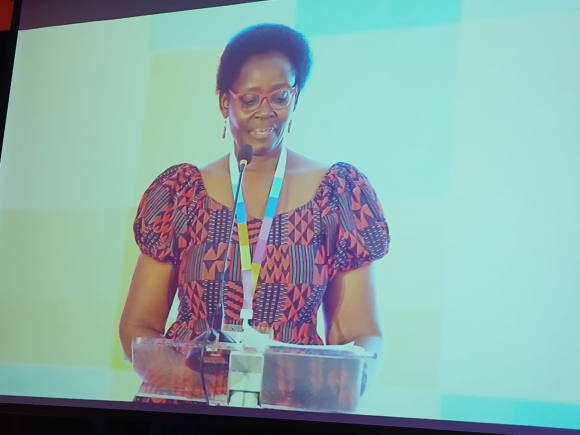
African governments have been urged to prioritise cervical and breast cancers by increasing funding for prevention, awareness, screening and treatment, as the diseases continue to pose major health threats to women across the continent.
The First Lady of Kisumu County in Kenya, Dorothy Nyong'o, who made the call, said African countries must treat women’s cancers as both a health and development priority.
She said increased investment should focus on prevention campaigns, awareness creation, medical screening for early and timely diagnosis, faster treatment pathways and improved patient navigation.
"If women are indeed the backbones of society, then African governments need to pay full attention to cervical and breast cancers, which remain the biggest threats to the health of women," she said.
"This is no longer only a moral issue. It's a strategic and economic issue deserving the full attention of governments."
Ms Nyong’o, who is also the Managing Trustee of the Africa Cancer Foundation and a member of the Africa Breast Cancer Council in Kenya, made the remarks in Nairobi on March 4 at a two-day conference organised by Roche Africa.
Conference on women’s health
The conference, dubbed Africa Press Day, focused on the theme “Health is Wealth” and highlighted the growing burden of breast cancer among women on the continent.
The meeting brought together journalists, policymakers, civil society organisations and advocacy groups from Ghana, Algeria, Tunisia, Kenya and Côte d’Ivoire.
It is the first time Roche Africa is organising the event in sub-Saharan Africa, although it is the second edition to be held on the continent.
Ms Nyong’o emphasised that the impact of cancer extended beyond individual patients to families and communities.
She said when a woman died from cancer, the consequences were far-reaching.
“When a woman dies from cancer, children lose a beloved caregiver, families lose income and communities lose stability,” she said.
“So we are calling on governments to drive an integrated approach to women's cancer care, save our women, strengthen our communities and elevate our economies. We have no time to lose.”
Health investment as economic strategy
Highlighting the importance of sustained investment in health systems, Ms Nyong’o said research showed that health spending generated strong economic returns.
According to her, every dollar invested in innovative cancer treatments could generate up to $12.40 in economic value, while early public health interventions could deliver more than 14 times the initial investment.
She explained that when health investments were treated strategically, they acted as economic multipliers rather than drains on national resources.
“It is time for systems to work together,” she said.
She cited Kenya as an example, noting that the country’s cancer landscape had changed significantly over the past decade through expanded treatment capacity and stronger partnerships.
These developments, she said, included the introduction of state-of-the-art radiation therapy facilities and nationwide breast cancer awareness and screening campaigns conducted through collaborations with organisations such as the Africa Cancer Foundation.
She also pointed to the establishment of Empower Clinics, which provide women with free walk-in screening for breast and cervical cancers.
Late diagnosis still a major challenge
The General Manager for East Africa at Roche, Kenya, Jacqueline Wambua, said late diagnosis remained one of the biggest challenges in cancer management across Africa.
She explained that many African women were diagnosed at advanced stages of the disease, not because the cancers were inherently more aggressive but because health systems often failed to detect them early.
Ms Wambua said Roche was working to change that narrative by strengthening every stage of the patient journey, from early detection to treatment and follow-up care.
According to her, the initiative aims to achieve a 60 per cent increase in breast cancer survival rates across Africa.
She warned that the continent’s cancer burden was projected to double by 2040 if urgent action was not taken.
“Africa's cancer burden is projected to double by 2040, yet many countries on the continent still invest less than five per cent of the health budget in cancer care,” she said.
“And we cannot afford to lose another generation to diseases that are preventable.”
Call for Africa to finance its health systems
Also speaking at the conference, the Principal Secretary at Kenya’s State Department for Medical Services in the Ministry of Health, Dr Ouma Oluga, emphasised the need for African countries to finance their own healthcare systems.
He stressed that stronger domestic investment in health infrastructure and services would be key to tackling cancer and other major diseases on the continent.
As part of the conference activities, participants held panel discussions on cancer care and visited the Empower Clinic at Mbagathi Hospital to observe ongoing screening and treatment initiatives aimed at improving women’s access to early diagnosis and care.
