
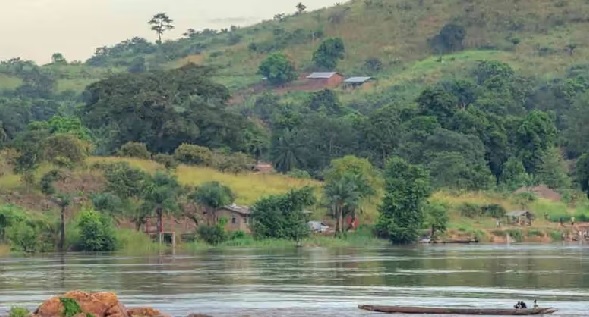
DR Congo launches $46.5m plan to turn one of Africa's great rivers into trade corridor
The Democratic Republic of Congo (DRC) has launched the active phase of a $46.5 million regional programme that aims to turn the long-neglected Ubangi River basin into an engine of economic growth, food security and cross-border trade in Central Africa.
The programme, known by its French acronym PREDIRE, was officially kicked off in the DRC on 16 February 2026, backed by the African Development Bank (AfDB) Group.
It targets three provinces, Nord-Ubangi, Sud-Ubangi and Mongala, areas that have for decades struggled with poverty, weak infrastructure and growing climate pressures.
The Ubangi River stretches over 2,272 kilometres, flowing between the DRC, the Central African Republic (CAR) and the Republic of Congo.
It is the main right-bank tributary of the Congo River, the second-largest river basin in the world. Despite its strategic location, the basin has remained largely underdeveloped.
Over the past 30 years, shifting rainfall patterns have reduced water levels and runoff in the Ubangi by up to 18%, damaging biodiversity, crippling river navigation and restricting trade.
PREDIRE is designed to reverse that trajectory. The programme is funded jointly by the African Development Fund, the AfDB’s concessional arm, the OPEC Fund and the DRC government.
It takes what planners call a water,food security, climate nexus approach, linking water infrastructure with agricultural support and climate adaptation.
On the ground, this means building climate-resilient water systems to underpin the DRC’s national agricultural transformation agenda, modernising the river’s information and monitoring systems, and improving navigation along the Ubangi to ease trade with the CAR and the Republic of Congo.
The programme is expected to reach 2.4 million people directly. More than half of those beneficiaries are women, 71% are young people, and 69% currently live in absolute poverty.
Beyond water access, the initiative is targeting the creation of 3,400 jobs, including 1,200 permanent positions, alongside entrepreneurship training and support for local livelihoods.
Working alongside the UN Refugee Agency (UNHCR), the programme will also run a dedicated resilience component for the most vulnerable, directly supporting 25,000 people in fragile and displacement-affected communities, while building capacity among more than 1,300 institutional and community actors.
The DRC’s component of PREDIRE is being supervised by the Ministry of Rural Development and technically coordinated through the PRISE II project, which will also introduce modern tools for water governance, data-driven planning and cross-border coordination.
The DRC launch follows the start of the CAR component in August 2025, making the Ubangi basin the site of one of the most ambitious transboundary development programmes currently underway in Central Africa.
The broader PREDIRE initiative sits within a wider cluster of investments in the basin. A separate $8.7 million initiative backed by the Global Environment Facility, with $67 million in co-financing, complements PREDIRE by integrating environmental and ecosystem approaches across the water, agriculture and transport sectors.
Project coordinator Deo Nsunzu described the stakes plainly: “The Support Programme for the Development of Cross-Border Water Infrastructure and Resources is more than a technical programme. It is a historic opportunity to stimulate the rural economy.”
For a region where water scarcity, conflict and climate stress have long fed each other, the programme represents a bet that shared rivers, managed well, can do the opposite.
