

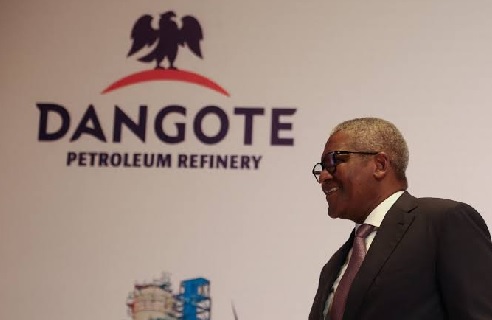
On Monday, September 14, 2026, the headline story on the BBC, Reuters and other major news networks was that Nigerian billionaire Aliko Dangote had launched Africa’s largest-ever share offering.
“Billionaire Dangote launches oil refinery 'people’s IPO, Africa’s biggest ’, read the Reuters headline. The story detailed how Africa’s richest man plans to raise as much as US$2.1 billion for his company’s expansion.
According to people familiar with the prospectus, the offer is for a roughly three per cent stake in the business.
On Wednesday, September 16, 2026, I had the opportunity to watch an interview Dangote granted to Arisenews on the share offering. It was fascinating.
First, he spoke about how the IPO was prioritising low-income earners and said he expected about 10 million shareholders by the close of the offer period. “I want people to actually be part of this good journey”, he said.
The “good journey” to which he refers is the success he has achieved in building his businesses, including the oil refinery.
For the first time in more than four decades as a businessman, Dangote is inviting ordinary Nigerians and other Africans to own a stake in his most ambitious project, the Dangote Petroleum Refinery.
Other reports say the refinery could pursue a secondary listing in the United States within the next three to four years.
The potential move would expand the refinery’s access to international investors and strengthen its presence in global capital markets.
So, what exactly is an IPO? For this question, I have good source material to explain. And this is from the Saturday, June 20, 2026 edition of this column.
In that edition, I wrote about another IPO, Kasapreko PLC’s initial public offering on the Ghana Stock Exchange. Explaining that offer, I wrote that “When a company like Kasapreko, known for its drinks and consumer brands, opens its shares to the public for the first time [initial offering to the public], it is showing the mechanics of the market in real time: how companies raise money, how investors decide what a business is worth, and how confidence, information, and risk all come together to set a price in the market”.
Further, I explained why companies go to the Stock Exchange to raise money in the first place, and with the Dangote Petroleum Refinery deal still fresh in our minds, it may be prudent to rely on the June 20 article to explain the dynamics further.
Businesses grow by launching new products, expanding into new markets and hiring more employees, all of which require capital.
They can raise funds by issuing bonds, which require regular coupon payments to lenders, or by selling ownership through shares, as Dangote did through its IPO.
Shares provide patient capital because shareholders do not expect fixed payments every quarter, as bondholders do.
Instead, they invest in the company’s future growth.
They want the share price to appreciate as the business performs better; they want dividends when profits are shared, and they want the value of their stake to be preserved through good governance.
The stock market is simply the place where those issued and listed shares, plus bonds and other instruments, are traded day after day.
So, for today’s lesson, the Dangote IPO is a textbook example! Before listing, the company was privately held, which means the owners did not have publicly recognised shareholders. Going public means the company is offering a portion of its shares to the public through the Nigerian Exchange (NGX) on September 14, 2026. And what happened next?
Bargain-hunting investors who believed in the brand and the company’s management would buy into the share offer.
In situations like this, as it is in most stock exchanges, the price is set based on what investors are willing to pay, and once trading begins, the price starts moving based on market conditions. That is the core of a stock market.
It is a market in the same sense as Makola or Kejetia, except the goods are shares, and in some cases, some exotic financial products also.
But just like your local market, the willing buyer is prepared to pay based on the value they expect to derive from the product and in the context of Kasapreko PLC or the Dangote Petroleum Refinery, the investor is basing his or her decision on future dividends and share price gains.
What makes the stock market different from a foodstuff market is scale and information. In a local market, the woman selling tomatoes looks at volume and value to know if it was a good day.
In the stock market, thousands of investors do the same calculation for hundreds of companies, using financial statements, management outlook, industry trends, and global news, among many other factors, to judge value.
When market sentiment about a company’s performance and outlook is positive, bargain-hunting investors step in.
For instance, if Dangote Petroleum Refinery continue to post strong sales, expands distribution further, and shows good profit margins, more people would want to become part of the success story by buying its shares.
Generally, listed share prices move in response to demand and supply conditions.
More demand than supply pushes the price up, and vice versa. That is why you hear about bull runs when prices are climbing with heavy turnover, and bear runs when the market is sluggish and prices drop.
The bull and bear are just descriptions of whether optimism or fear is driving decisions.
According to analysts familiar with the company’s operations and financial dealings, the company has already secured some underwriting commitment, and a private placement in July 2026 was oversubscribed, raising US$2.5 billion from African institutional investors.
"We want every human being living on the continent to be part of this action," Dangote said at the signing ceremony in Lagos on September 8.
"There is no segregation on who can own these shares." CEO David Bird called it "the people's IPO." I call it a mark of success for the man born in Kano in 1957, who started by selling sweets to classmates, then trading sugar and rice with a loan from his uncle in 1977. A true lesson in success.
